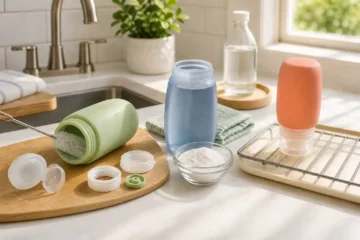
A useful travel bottle kit has one container per product you actually use daily, matched to that product’s thickness and dispensing style, plus a bag that meets your departure airport’s liquids rule and a way to tell the bottles apart once they’re all filled with something white and unlabeled. That’s usually four to seven containers for most travelers, not the fourteen or twenty-one pieces bundled into most “complete” sets sold online, most of which end up back in a drawer after the first trip. What decides whether a piece belongs in your kit isn’t the set it came in; it’s whether you have a real product that needs that exact container. PackRefills builds pages like this one from research rather than a lab test we haven’t run; our approach is on our about page.
Start From Your Products, Not From the Set
The most common mistake with a bundled kit is packing every piece it came with instead of the pieces you’ll actually fill. Lay out what you genuinely use in a normal week: shampoo, conditioner, body wash, face wash, moisturizer, sunscreen, maybe a styling product. Each of those maps to a container decision, not a container count. A thick conditioner needs a wide opening it can be squeezed through; a thin toner needs a controlled pour or a spray top so it doesn’t flood out. Buying a set sized for someone else’s routine, then trying to force your five products into their fourteen slots, is how a kit ends up half-empty in a suitcase pocket.
Container Types Worth Having, and What Each One Is For
Flip-top or disc-top bottles. The workhorse for shampoo, conditioner, body wash and lotion. A wide flip-top opening handles thicker products better than a narrow spray nozzle.
Flexible silicone tubes. Squeeze-to-empty containers that leave less product trapped than a rigid bottle for the same use cases. See silicone travel tubes vs rigid bottles for when a tube is the better fit and when a rigid bottle handles a product better.
Spray or mist bottles. For toner, setting spray, or a leave-in product applied as a fine mist rather than squeezed out.
Small jars. For a balm, a solid-adjacent cream, or anything too thick to pour or squeeze cleanly.
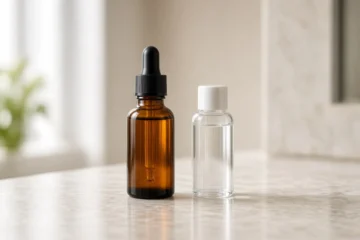
Precision droppers. For a serum or oil applied a few drops at a time. A dropper controls the dose in a way a squeeze bottle can’t, and it matters more for an expensive product you don’t want to over-dispense.
Not every kit needs all five types. Most travelers use two or three of them; the rest sit in a drawer unless a specific product calls for that shape.
Sizing Each Container to the Trip, Not to the Set
A weekend trip needs less of everything than a two-week one, and the container size should follow the trip length, not whatever size happened to be in the box. For the current size limits that apply to any container going through a carry-on checkpoint, and why the number isn’t the same at every airport, see travel bottle sizes explained. A common mistake is filling every bottle to its rated capacity regardless of how much of that product a trip actually needs, which just adds weight and bulk for liquid that comes home unused.
The Bag, and Why It’s Part of the Kit
Whatever bottles a kit includes, they still need to travel inside whatever bag format the departure airport requires for screening, whether that’s a specific size of resealable transparent bag or, at some airports now, no special bag at all for containers under their higher allowance. A kit that ignores this and just supplies bottles leaves the traveler to source the bag separately at the worst possible time, in the security line. Build the bag into the kit from the start.
Tools That Earn Their Space: Funnel, Labels, Pipette
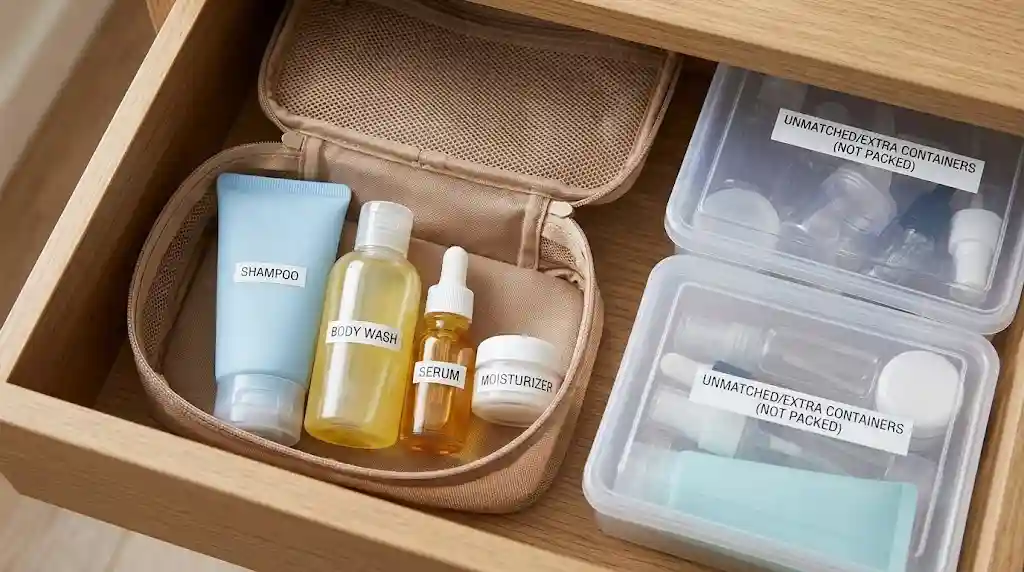
A small funnel or a pipette for thin liquids makes filling faster and avoids the mess of pouring straight from a full-size bottle into a narrow opening; see how to refill travel size bottles for the full routine. Labels or a permanent marker solve the single most common complaint about travel bottle kits: once four or five bottles are filled with similarly colored liquids, they become genuinely hard to tell apart by sight. A kit without a labeling method is a kit that gets used wrong at least once.
What a Kit Doesn’t Need
Duplicate sizes of the same container type, a piece count padded to sound like better value, and any container shaped for a product category you don’t actually use, like a shaving-specific dispenser if nobody in the household shaves with a liquid product. A smaller kit that matches your actual products beats a larger one that matches a marketing photo.
The Honest Trade-Off Nobody Selling a Set Will Point Out
A bundled set is convenient to buy in one purchase, but it’s built to look complete on a product page, not to match any specific traveler’s five or six real products. Buying pieces individually, matched to what you actually use, usually costs about the same or less and produces a kit with no dead weight. The exception is travelers who genuinely use six or more different liquid products daily, where a bundled set’s variety is closer to a real match. For most people packing for a normal trip, four to seven well-matched containers do the job a fourteen-piece set is sold to do. Any product mentions on this site follow our affiliate disclosure, and this page recommends the approach over any single product.
A Simple Starting Kit
| Product | Container type | Notes |
|---|---|---|
| Shampoo | Flip-top bottle or tube | Tube empties more completely |
| Conditioner | Silicone tube | Thicker product, wide opening matters |
| Body wash | Flip-top bottle | High volume use, size to trip length |
| Face wash or toner | Small bottle or spray | Match to thin vs. gel consistency |
| Moisturizer | Small jar or tube | Depends on cream thickness |
| Sunscreen | Flip-top bottle | Reapplication means size up for longer trips |
| Serum (if used) | Precision dropper | Controls dose, protects an expensive product |
FAQ
How many bottles should a travel kit actually have?
Most travelers need four to seven, matched one-to-one with the products they use in a normal week. Larger bundled sets are sized for variety, not for any one person’s routine.
Is a bundled travel bottle set worth buying over individual pieces?
It depends on how many different products you use. Travelers with five or more distinct daily products may find a set’s variety useful; travelers with fewer usually get a better-matched, less cluttered kit buying pieces individually.
Do all the bottles in a kit need to be the same size?
No. Size should follow the product and the trip length. A shampoo bottle used daily on a two-week trip needs more capacity than a serum used in drops.
What’s the most commonly forgotten piece in a travel bottle kit?
A labeling method. Several filled bottles that look identical is the most common complaint travelers have about their own kits, and it costs nothing to fix.
Does a kit need its own carrying bag?
It should include, or be built around, whatever bag format your departure airport’s liquids screening requires, so you’re not sourcing one at the checkpoint.