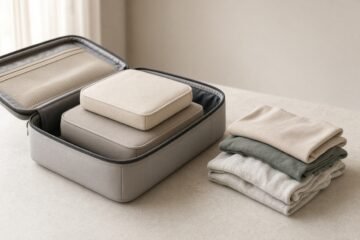
Two pieces of advice, both stated confidently, and they contradict each other. Roll everything, because it saves space and prevents wrinkles. Fold everything, because rolling creases things and wastes space.
They are both right, and they are answers about different situations. Once you see which situation each one describes, the argument disappears.
What each one actually does
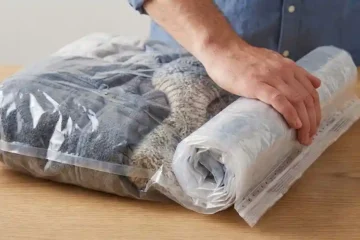
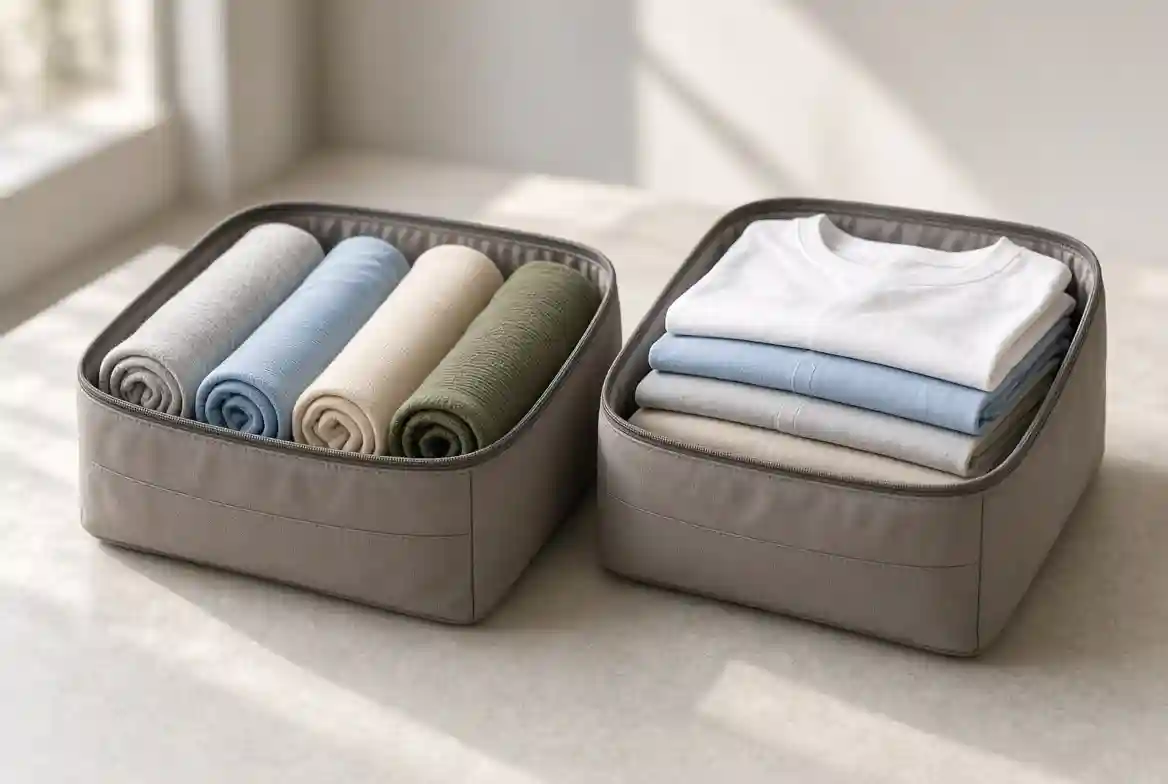
Rolling turns a flat garment into a cylinder. Cylinders pack against each other with gaps at the curves, and a rolled garment holds its own shape, so a half-empty container of rolls stays arranged.
Rolling creates one continuous curved crease along the whole garment rather than a small number of sharp folds. That is the mechanism behind the wrinkle claim, and it cuts both ways. Soft fabrics come out of a roll looking fine because the gentle curve relaxes out. Crisp fabrics come out with a distributed rumple that is harder to get rid of than a single crease line.
Folding turns a flat garment into a smaller flat rectangle. Rectangles stack against each other with no gaps at all, and a stack of folds is denser than a set of rolls when the container is completely full.
Folding puts sharp creases at a small number of specific places, and those creases are exactly where a shirt is supposed to have them if you fold along the seams.
The resolution
Two variables decide it, and neither is the one people argue about.
How full the container is.
- A completely full container favors folding. Flat stacks with no gaps are the densest arrangement available, and a full cube is the situation where that matters.
- A partly full container favors rolling. Rolls hold their shape and do not slump, so a cube that is not full stays arranged rather than becoming a pile.
What the fabric is.
- Soft, knitted, stretchy, casual: roll. T-shirts, underwear, socks, jeans, casual trousers, soft dresses. These recover from a curve and they slot into gaps.
- Crisp, structured, tailored: fold. Shirts with collars, anything you would iron, jackets, anything with a lining or a structured shoulder.
So the honest answer is both, in the same bag, which is the thing neither piece of advice says because a rule that says "it depends" makes a poor headline.
The method that suits most people
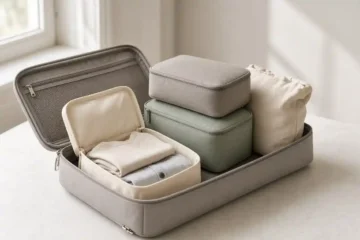
Roll the soft things, fold the crisp things, and put them in different cubes.
That single arrangement resolves the argument and it has a practical benefit beyond packing: your shirts are not underneath your socks, so getting one out does not disturb the other. That is a cube-per-category question and it has its own treatment.
Two refinements worth knowing:
Roll tightly, not loosely. A loose roll is the worst of both: it takes the space of a roll and creases like a fold. Smooth the garment flat, fold it lengthwise to the width you want, then roll from one end with even pressure.
Fold along the seams. A crease along a seam is invisible. A crease across the middle of a shirt front is the one people notice.
The wrinkle question, honestly
Neither method prevents wrinkles. They distribute them differently.
What actually causes wrinkles in a bag: pressure over time, movement, and moisture. Not primarily the shape you folded something into.
So the things that genuinely help are not about rolling or folding at all.
Pack full. Movement inside a container is what turns a neat arrangement into a creased one. A cube packed to its shape moves less than a half-empty one, which is another reason a partly full cube is a worse situation.
Put the crisp things on top. Whatever is at the bottom carries the weight of everything above it for the whole journey.
Do not compress the things you care about. A compression cube is applying continuous pressure by design, which is exactly the cause named above. Compress the socks and not the shirts.
Hang it up on arrival, in a bathroom while a shower runs if you have nothing better. Most travel creasing relaxes out on its own given air and time.
What about space
This is where the two camps make competing claims and both are quoting figures nobody can check.
No percentage appears on this page, and this site has not measured anything. What can be said without a measurement is the mechanism: rolls have curved surfaces and therefore gaps between them; folds are flat and stack without gaps. In a completely full container, flat wins on density. In a partly full one, rolls win on stability, and stability is worth more than density when the container is not full anyway.
The reason people report opposite results is that they are packing different bags to different fullness with different clothes, which is the same reason the compression debate never resolves.
If you want an answer for your own bag, pack it both ways and look. An hour, and the result is about your clothes rather than about a claim.
The things that do not fit either method
Shoes. Neither rolled nor folded, and they take more space than anything else per item. They go at the bottom, near the wheels or the base of a backpack, and they get filled with socks.
Anything rigid. Toiletry bags, chargers, books, electronics. These are solids and they fit into the gaps rather than being arranged.
Liquids. These go in a sealed bag of their own regardless of anything else in this article, because the cost of a leak is the rest of your clothes rather than the bottle. Why travel bottles leak on a plane covers what actually fails, and how to fill and close a travel bottle so it survives the flight covers the fill level that prevents most of it.
Anything wet or dirty mid-trip. Its own container, always.
The short version
- Rolling makes cylinders that hold their shape and leave gaps. Folding makes flat stacks that pack densely with no gaps.
- A full container favors folding. A partly full one favors rolling.
- Soft and stretchy: roll. Crisp and structured: fold along the seams.
- Do both, in different cubes. That is the actual answer.
- Neither prevents wrinkles. Pressure, movement and moisture do that.
- Pack full, put crisp things on top, do not compress what you care about, hang it up on arrival.
- No percentage appears here. Pack your own bag both ways if you want a number.