A bag of assorted bottles costs less than one bottle from a brand you have heard of. Both hold liquid, both have lids, and nothing on either listing explains what the difference is.
This page does not name products and does not rank them. This site has bought and used nothing, so a verdict here would be an opinion in a costume. What it can do is set out the five things a higher price can be paying for, so you can work out which of them you actually need, and give you a test that answers the question for the bottles in front of you.
The five things price can buy
Not all of them are present in any given expensive bottle, and some are present in cheap ones.
1. The closure. This is the one that matters most and it is the least visible on a listing. A better closure has a positive locked state, an intact inner seal, and threads that keep tightening after a hundred uses. The lid is what fails, not the bottle, and why travel bottles leak on a plane is the mechanism behind that claim.
2. The aperture and the geometry. Whether a bottle is actually usable with your product. A wide neck that fills without a funnel and empties without waste is a design decision, and it costs something to make. Whether that matters to you depends entirely on what you are decanting, which is the subject of flexible silicone tubes vs rigid bottles.
3. Material and finish. Whether a bottle stains, whether it holds a smell, and whether the printing survives a wash. Different materials behave differently and the differences are real: silicone vs plastic vs aluminum travel bottles is the comparison.
4. Consistency. A multipack contains bottles that were not individually checked. Some will be fine and some will not, and you find out which on a trip. A single bottle from a maker that produces one product line is a different manufacturing proposition.
5. Things that are not performance. Appearance, packaging, a brand, and a shape that fits a shelf. These are legitimate reasons to prefer something and they are not reasons it works better.
The useful question is not whether expensive is better. It is which of those five you are short of.
The case for the multipack, made honestly
It is stronger than people who sell single bottles will tell you.
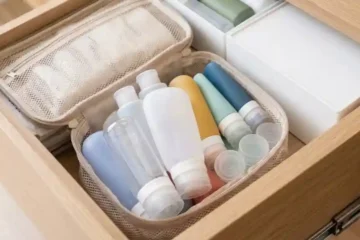
You need several bottles, not one. A travel kit is four to six containers, and buying them individually is a different budget entirely. What belongs in that kit is its own question and the answer is smaller than most sets: what actually belongs in a refillable travel bottle kit.
You do not know yet what shapes you need. A set is a cheap way to find out which apertures and which closures suit the products you actually carry, and after one trip you will know.
Some will fail and that is survivable, provided you test them at home rather than discovering it in a suitcase.
Bottles are consumables. They get lost, they get sticky, they get thrown away. Treating them as durable goods is a mistake in either direction, and when a refillable bottle is finished covers the signals that a bottle’s life has ended regardless of what it cost.
The case for the single expensive bottle
Also stronger than it looks, and it is narrower.
For one specific product you care about. A serum, a fragrance, a prescription-adjacent product, or anything where a leak is expensive rather than annoying.
For a shape you have established you need. After the set has taught you that you need a wide-neck squeeze tube, buying a good one is a targeted purchase rather than a guess.
For anything that has to work every time. A pump you rely on, a sprayer you use daily.
When the closure is the thing you are buying, which is the only one of the five that reliably correlates with price.
The test that settles it
Since nobody can rank these for you, here is what to do with whatever you already own or are about to buy. It costs a day.
- Fill it as you would for a trip, with the actual product at the actual level.
- Close it the way you would close it in a hurry, not carefully.
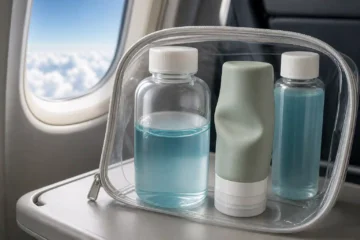
- Seal it in a clear bag, upside down, on a plate, with a book on top of it. The weight is the part most people leave out, and a packed bag has weight in it.
- Leave it overnight and look at the bag, not the bottle.
Anything visible is a failure and that bottle does not travel. Do this once per bottle, when you get it. A multipack tested this way is a multipack you can trust, and it turns a gamble into a known quantity for the price of an evening.
It also produces the only honest comparison available: your bottles, your products, your closing technique.
What price does not buy
Immunity from the pressure change. A well-made bottle overfilled and closed at ground level still has air in it that expands. That is physics rather than quality, and how to fill and close a travel bottle so it survives the flight covers the fill level that avoids it.
Immunity from a dirty sealing surface. Product dried on a rim defeats an expensive closure exactly as it defeats a cheap one.
A reason not to bag everything. Whatever you paid, every bottle goes in a sealed bag, because the cost of being wrong is your clothes rather than the bottle.
A longer life if it is stored badly. A bottle put away full, closed and damp comes out unpleasant regardless of price: storing refillables between trips covers what actually extends a bottle’s usable life, and it is free.
What this page will not tell you
It names no product and no brand, and it publishes no price, no price range and no multiple. None of those was read at a source in this session, and prices move.
It gives no failure rate. Any figure of that kind on this subject would need to come from a stated methodology, and this site has run none.
It does not tell you whether a specific bottle is worth it. The overnight test does that, for your bottles.
The short version
- Price can buy five things: the closure, the geometry, the material, consistency, and things that are not performance.
- The closure is the one that correlates most reliably with price and matters most.
- A multipack is a reasonable first purchase because you do not yet know which shapes you need.
- A single good bottle is worth it for one product where a leak is expensive, or once you know the shape.
- Run the overnight test with a weight on top, once per bottle. That is the only comparison about your bottles.
- Price buys nothing against overfilling, a dirty rim, or bad storage. Bag everything regardless.