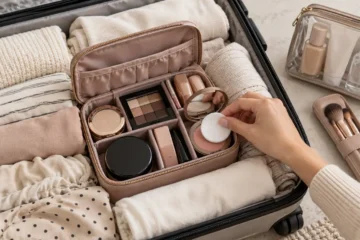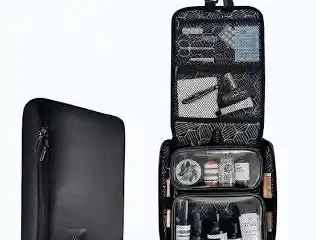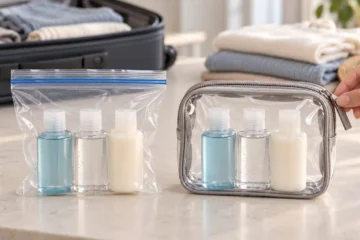
Here is how to pack medication for travel when the trip runs to weeks: carry it in your carry-on, bring enough for the whole trip plus a buffer for delays, keep the supply in its original labeled containers with copies of your prescriptions, and settle the time zone question with your prescriber before you pack, not at the gate. That summary is built from the CDC's Travelers' Health guidance and TSA's own screening pages, both read on September 25, 2026. The rest of this page turns those rules into a packing plan: how much, in which containers, labeled how, and split across which bags.
This page is about packing, not about medicine. Nothing here tells you what to take, how much, or when. Those are questions for your pharmacist or prescribing clinician, and several sections below point you back to them at the moment the question comes up.
Why a Long Trip Changes the Packing Problem
A weekend away barely tests how you pack medication. A pill organizer and a spare day or two cover it. A three week trip is different in four ways:
- Volume. Three weeks of several medicines no longer fits in a seven-day organizer, so most of the supply has to travel in something else.
- Identification. The further you go and the longer you stay, the more likely someone (a checkpoint officer, a customs officer, a pharmacist abroad) needs to know what a tablet is. Loose pills in a baggie answer nobody.
- Loss. A lost bag on day two of a three week trip is not an inconvenience. It is two and a half weeks without medicine you rely on.
- Time. Crossing several time zones raises a scheduling question that a packing list cannot answer on its own.
The pages that rank for this question mostly repeat the same five tips in a bullet list. What they rarely do is separate the rule (what TSA requires) from the advice (what the CDC recommends), or show how the container choice follows from each. That separation is the spine of this page.
Step 1: Work Out the Quantity Before You Pack
The CDC's Traveling Abroad with Medicine page says to "take enough to last your entire trip, plus extra in case of travel delays." It does not set a number of spare days, and neither will we. How large the buffer should be depends on the medicine, the destination and how easy a refill would be there, which is a conversation for your pharmacist.
What you can do on your own is the arithmetic:
- Count the days away, including travel days on both ends.
- Add the buffer your pharmacist or prescriber suggests for delays.
- Check what you actually have. If the supply at home will not cover that total, you have a pharmacy problem to solve before the trip, not a packing one.
The CDC also notes that "Many countries allow a 30-day supply of certain medicines, but also require the traveler to carry a prescription or a medical certificate." For trips long enough to approach that figure, check the rules of your destination before assuming the whole supply can travel with you. The CDC's page points travelers to the destination's embassy, and to the embassies of any countries where they have layovers.
Step 2: Choose Containers by the Job They Do
There are two jobs here, and one container rarely does both well.
| Job | Best container | Why |
|---|---|---|
| Daily access on the trip | A pill organizer or a small daily pouch | Fast to use, and the day's doses are visible at a glance |
| Identifying the medicine | The original, labeled pharmacy container | Carries the name, dose and prescriber on the label |
| Holding the bulk supply | The original containers, bagged | Keeps the label with the pills for the whole trip |
| Liquids | Original bottle, kept upright | The label and the measuring marks stay with the liquid |
What TSA requires. At the time of writing, TSA's travel tips page on packing medication in a pill case, read on September 25, 2026, states: "TSA does not require passengers to pack medicine in prescription bottles; however certain state laws are in place regarding the labeling of prescription medicine, which require passengers to comply." The same page says you can bring medication "in pill or solid form in unlimited amounts if it is screened." So an organizer is allowed at a US checkpoint. Our longer look at the checkpoint side of this is in pill organizers on a plane and what TSA actually requires.
What the CDC advises. The CDC's Traveling Abroad with Medicine page, read on September 25, 2026, goes further: "Keep medicines in their original, labeled containers. Ensure that they are clearly labeled with your full name, health care provider's name, generic and brand name, and exact dosage."
The two do not contradict each other. TSA is describing what gets you through a US checkpoint. The CDC is describing what protects you across a whole international trip. On a long trip, the practical answer is both: a small organizer for the next few days, and the rest of the supply still in the pharmacy containers.
Whether a particular medicine can safely leave its original packaging at all is a separate question. Some come in packaging designed to protect them from moisture or light. Ask your pharmacist before moving anything into an organizer for weeks.
Step 3: Label Everything That Is Not Already Labeled
The pharmacy label does most of the work. Where it cannot, add your own.
- Keep the original label readable. A label that has rubbed off or been soaked in a leaking toiletry bottle identifies nothing. A zip-top bag around the pharmacy bottles protects the print.
- Label the organizer itself. An organizer holds unlabeled pills. A strip of tape on the lid with your name and the medicine names (matching the pharmacy labels) closes that gap.
- Carry the paper. The CDC advises bringing "copies of all written prescriptions, including the generic names for medicines," and leaving a copy at home with a friend or relative in case you lose yours or need an emergency refill.
- Get the letter if it applies. The CDC says to ask your prescribing provider for a note if you use controlled substances or injectable medicines, and gives EpiPens and insulin as examples.
The labeling principles that stop you washing your hair in lotion also stop you mixing up two white tablets. We cover the method for small containers in how to label travel bottles.
Step 4: Split the Supply Across Bags
TSA's pill case page states that "You may travel with your medication in both carry-on and checked baggage. TSA strongly recommends you place these items in your carry-on in the event you need immediate access." The CDC says the same thing for a different reason: "Pack medications in a carry on in case your luggage is lost or delayed."
On a long trip, the carry-on is where the supply belongs. Within that, it is worth thinking about how much a single lost bag could cost you:
- Carry-on: the organizer plus the bulk supply in original containers.
- A second carry-on or personal item: some travelers split the bulk supply between two carry-on pieces, so one bag left on a train does not take everything with it.
- Travel companion: if you travel with someone, some people put a few days' supply in the companion's carry-on for the same reason.
- Checked bag: TSA allows it, but both TSA and the CDC point to the carry-on, and a checked bag is the one you hand over and cannot reach.
None of this is a TSA requirement. It is a packing decision about risk, and it only works if every split portion is still labeled.
Step 5: Liquid Medication and the Checkpoint
Liquid medication follows a different rule from pills. TSA's What Can I Bring page for liquid medications, read on September 25, 2026, gives "Yes (Special Instructions)" for carry-on bags and says: "TSA allows larger amounts of medically necessary liquids, gels, and aerosols in reasonable quantities for your trip, but you must declare them to TSA officers at the checkpoint for inspection." TSA's pill case page adds that you "don't need to place medically required liquids in a zip-top bag," but that you "must tell the officer you have medically necessary liquids at the start of the screening process."
Two practical consequences for packing:
- Keep liquid medication out of the quart bag and somewhere you can reach at the checkpoint, so you can declare it without unpacking.
- Keep it upright and in its original bottle, so the label survives and a loose cap does not empty it into the bag.
TSA also notes that "The final decision rests with the TSA officer on whether an item is allowed through the checkpoint." The detail on what counts as medically necessary and how screening works is in TSA medication liquid rules.
Step 6: Time Zones Are a Question for Your Prescriber
The CDC's guidance here is short and specific: "If you are traveling to a different time zone, ask your health care provider about any changes to taking your medicine." We are not going to go further than that. How a schedule shifts across time zones depends on the medicine, and that is exactly the kind of decision that belongs to a clinician.
Where packing does help is in carrying out whatever plan you are given:
- Write the plan down and keep it with the prescription copies, so it is not only in your memory at 3 a.m. local time.
- Label the organizer to match the plan. A weekday organizer assumes a normal week. If the plan your provider gives you does not map neatly onto weekdays across a date line, relabeling the compartments to match that plan keeps the organizer from misleading you.
- Set any phone reminders before departure, and check how they behave when the phone changes time zone, so a changed clock does not silently move them.
Step 7: Storage on the Road
The CDC advises finding out how to store your medicine safely while traveling and checking whether it needs refrigeration. That answer comes from the label and your pharmacist, not from a packing list. What a packing list can do is make sure the answer is followed:
- Know the storage instructions before you pack, not after the medicine has sat in a hot car.
- Keep medicines out of the bathroom if the label says to protect them from moisture. A steamy hotel bathroom is a poor shelf.
- If refrigeration is required, plan the cooling container and how it will get through screening before the day you fly, and check TSA's current pages for how cooling items are screened.
How to Pack Medication for Travel: The Long-Trip Checklist
- Total days plus the buffer your pharmacist suggests, counted and confirmed.
- Bulk supply in original, labeled containers, bagged against leaks.
- A pill organizer for the next few days, labeled with your name.
- Copies of prescriptions with generic names, one set with you and one left at home.
- A provider's letter if you carry controlled substances or injectables.
- Your destination's (and layover countries') rules checked through their embassies.
- Liquid medication kept upright, outside the quart bag, ready to declare.
- The time zone plan from your provider, written down.
- Everything in the carry-on, split across two pieces if you want a margin.
Rules change without notice. Check tsa.gov and your destination's embassy before you fly.
FAQ
Do I need to keep medication in the pharmacy bottles to fly?
Not for a US checkpoint. TSA's pages, read on September 25, 2026, say TSA does not require medicine in prescription bottles, though state labeling laws apply. The CDC advises original labeled containers for international travel, so on a long trip many travelers carry both.
How much medication should I pack for a long trip?
The CDC advises enough for the entire trip plus extra in case of delays. It does not set a number of extra days, so ask your pharmacist what buffer suits your medicines and destination.
Can I put medication in my checked bag?
TSA allows it, but TSA strongly recommends the carry-on in case you need immediate access, and the CDC advises the carry-on in case luggage is lost or delayed.
How do I handle medication across time zones?
The CDC says to ask your health care provider about any changes before you travel. Once you have that plan, write it down and label your organizer to match it.
Does liquid medication have to go in my quart bag?
No. TSA says medically required liquids do not need to go in a zip-top bag, but you must tell the officer about them at the start of screening.