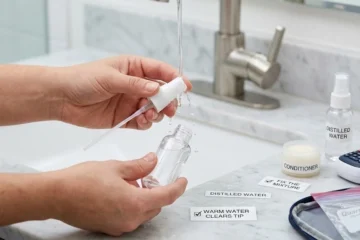
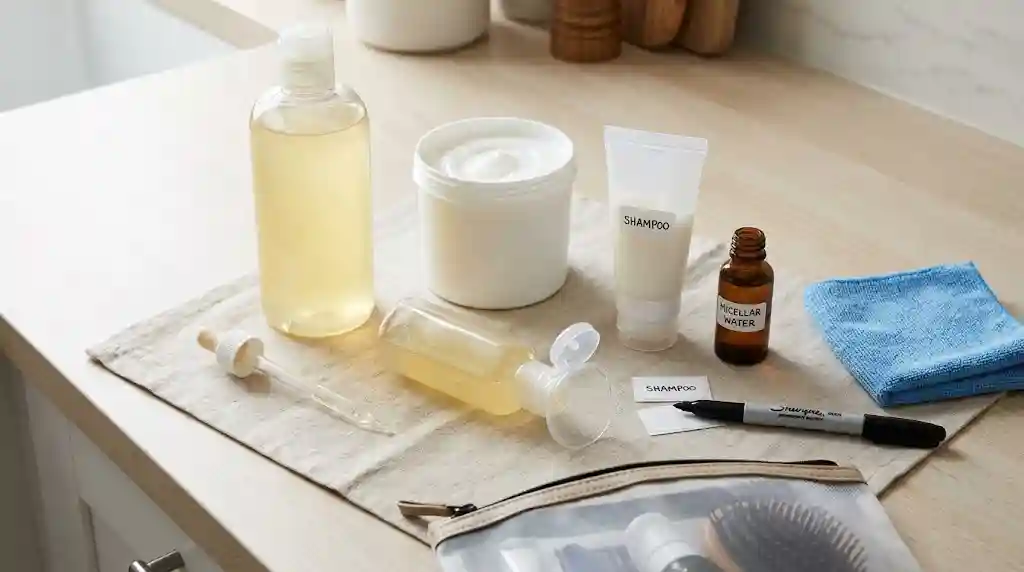
Refilling a travel-size bottle from a full-size one takes about four minutes per product once you have the right tools laid out: wipe the full-size bottle's opening, fill through a small funnel or with a pipette for thin liquids, leave a small gap at the top rather than filling to the brim, wipe the outside, cap it, and label it before it goes anywhere near an identical-looking bottle. Most of the mess and most of the wasted time in refilling doesn't come from the pouring step; it comes from skipping a clean surface, guessing at sizes, and refilling one bottle at a time the morning of a trip instead of batching the whole kit the night before.
Gather Everything Before You Open a Single Bottle
The single biggest time-saver is doing this once, for every product, rather than refilling bottles as you happen to think of them over several days. Lay out every empty travel container, the full-size products you're refilling from, a small funnel, a pipette for thin liquids, a damp cloth, and a marker or labels. Working through all of them in one sitting, on a wipeable surface like a kitchen counter rather than a bathroom sink edge, is what actually gets the routine down to a few minutes per bottle instead of ten. PackRefills covers this kind of process detail from research rather than a lab test we haven't run; see our about page for that approach.
Match the Tool to the Product's Thickness
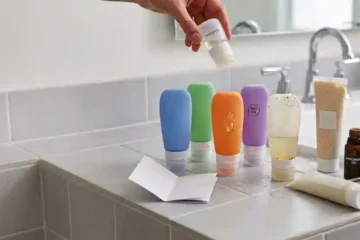
A funnel works well for thin to medium liquids: shampoo, body wash, toner. It struggles with thick conditioner or sunscreen, which tends to clog a narrow funnel neck and pool instead of flowing through. For thick products, either use a wide-mouth container you can spoon or squeeze directly into, or use a pipette or syringe-style tool that draws the product up and releases it directly at the opening rather than relying on gravity through a funnel. For very thin liquids like micellar water or a spray toner, a pipette also avoids the overshoot that happens when a thin liquid runs through a funnel faster than expected. A flexible silicone tube generally takes a thick fill better than a narrow rigid bottle for this same reason; see silicone travel tubes vs rigid bottles for when each container shape is the better choice.
Fill to Slightly Under Capacity, Not to the Brim
Filling a container completely full removes the small amount of headspace it needs to handle pressure changes in the cabin, and it also makes any container harder to close cleanly without product squeezing out at the seal. Leaving roughly a fifth of the container empty is a reasonable working habit across most bottle and tube types, and it also means you're less likely to accidentally exceed the container's own capacity, which matters for meeting the size limit that applies to whatever you're flying under. See travel bottle sizes explained for what that limit actually is and why it isn't the same number everywhere.
Wipe Before and After, Every Time
Wipe the full-size bottle's opening before you pour from it; product residue collects there between uses and is the source of most of the "why does the outside of my funnel always feel gross" problem. Wipe the travel bottle's own opening and cap threads after filling, before you close it, since product left on the threads is what turns into a sticky bottle by the next trip and what feeds mold growth over repeated cycles if it's sealed while still damp with residue.
Label Before You Move On, Not After
The most commonly skipped step is labeling, usually because it feels faster to "just remember which one is which." That confidence rarely survives four or five bottles filled with similarly colored, similarly textured products sitting together in a bag. Label or mark each bottle immediately after filling it and before you start the next one, not at the end of the whole batch, when you've already lost track of which fill was which. A simple system, initials or a symbol in permanent marker, or a printed label, costs seconds and prevents the actual most common travel-bottle complaint: washing your hair in body lotion because two bottles looked identical.
Choose the Right Container for Each Fill
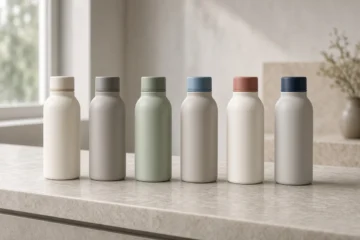
Not every product belongs in the same container type. If you're building out a full set rather than refilling containers you already own, what belongs in a refillable travel bottle kit covers which container types are actually worth having and which ones a bundled set oversells.
What Not to Refill This Way
Not every liquid should be decanted from its original packaging. Contact lens solution is the clearest example: it's manufactured sterile specifically because it contacts the eye, and pouring it into a non-sterile travel bottle undoes that, so it's the one product on this list that should stay in its own manufacturer-sealed travel size rather than being refilled at home. Any product where the original container is glass or a specific material, rather than a generic bottle, is also worth a second look before assuming a plastic or silicone travel bottle is a safe swap; check the product's own guidance if you're unsure.
Time It the Night Before, Not the Morning Of
Batching every refill the night before a trip, rather than the morning you're leaving, does two things: it gives filled bottles time to be checked for leaks by simply sitting upright for a few hours before they go in a bag, and it removes refilling entirely from the list of things competing for your attention during actual packing. A bottle that's going to weep at the seams usually shows it within the first hour, not after being jostled in a suitcase, so a night's head start catches a bad seal before it ruins a shirt.
FAQ
How long does it actually take to refill a full set of travel bottles?
About four minutes per container once tools are laid out and you're working through several bottles in one sitting, closer to eight to ten minutes per bottle if you're doing it one at a time without a funnel or pipette on hand.
Should I fill a travel bottle all the way to the top?
No. Leaving roughly a fifth of the container empty gives it room to handle cabin pressure changes and makes it easier to close cleanly without product at the seal.
What's the best tool for refilling a thick product like conditioner?
A wide opening you can squeeze or spoon directly into works better than a narrow funnel, which tends to clog with thicker liquids.
Why do my travel bottles get sticky between trips even when I clean them?
Usually because they're capped while still damp with residue at the threads rather than fully wiped and dried before closing, which is also the most common starting point for mold.
Should I refill contact lens solution the same way as shampoo or lotion?
No. Contact lens solution is sterile-packaged and should not be decanted into a non-sterile travel bottle. Use a manufacturer-sealed travel size instead.