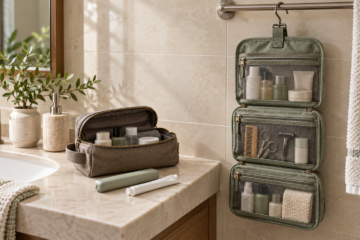
A travel toothbrush case keeps a brush clean in transit, but it also keeps in whatever water the brush carried when you closed it. The American Dental Association says storing a moist toothbrush in a closed container promotes microbial growth more than open air does. So the case is not the problem; closing it on a wet brush for hours is. Shake the brush out, pack it last, and open the case again as soon as you arrive so the brush can stand upright and air dry.
That is the whole answer. The rest of this page explains the mechanism, compares case types by what they do with water, and gives a routine for the day you leave.
How this page was put together. This is desk research. We did not test any case, we have no product samples and no test rig, and we do not name or rank products. The hygiene guidance below comes from the American Dental Association, quoted directly. Where we reason from how water and air behave in a closed space, we say that is what we are doing. Questions about your own mouth or gums belong with your dentist.
What the ADA Says About Closed Containers
The clearest primary source on toothbrush storage is the American Dental Association's toothbrush guidance, which we read on September 23, 2026. Four of its points bear directly on a travel case:
- Rinse. "Rinse the toothbrush thoroughly after each use to remove any remaining paste and debris."
- Stand it up and let it dry. "Store toothbrushes in an upright position after use and allow them to air dry."
- Closed containers. "Storing a moist toothbrush in a closed container promotes microbial growth more so than leaving it exposed to the open air."
- Replace on schedule. "Toothbrushes should be replaced approximately every three to four months or more often if the bristles become matted or frayed."
The ADA also says this, and it matters for keeping the topic in proportion: "While toothbrushes have been shown to harbor bacteria, there is no evidence that these bacteria cause adverse health effects."
Read together, those lines give a calm picture. A brush that goes into a case wet sits in the conditions the ADA flags. That is a reason to change how you pack it, not a reason to panic about a brush that spent one flight in its case.
Why a Travel Toothbrush Case Holds Water
A case does not create moisture. It keeps the moisture you put in it. Here is the mechanism, step by step.
The brush carries more water than it looks like. Bristles are packed tightly into tufts, and water sits between them and in the base where the tufts meet the head. A quick shake clears the tips. The base stays wet much longer.
A closed case has a tiny volume of air. On a bathroom counter, water leaving the bristles drifts off into a whole room. Inside a snap-shut case, the same water has only a few spoonfuls of air to move into. That air becomes humid quickly, and humid air takes up water slowly, so drying all but stops.
The water has somewhere to collect. Drips run off the head and pool along the inside of the case, often at whichever end sat lowest in the bag. When the case is opened later, that pooled water is still there, and the next time it closes, the cycle starts again with a damp case as well as a damp brush.
The case is inside other closed things. This is the part product pages skip. A vented case only helps if the air outside the vents is drier than the air inside. If the case sits in a zipped toiletry pouch, inside a packing cube, inside a closed suitcase, the vents are exchanging air with a pouch that is also closed. We have not measured this, but the reasoning is simple: each layer limits how much fresh air reaches the brush, so a vented case in a sealed pouch behaves much like a sealed case.
The micro-intent behind this topic is a specific picture: a sealed case with a wet brush in it, for six hours. That is exactly the case the ADA's closed-container line describes, and it is the one worth designing your routine around.
Travel Toothbrush Case Types, Compared by What They Do With Water
The shopping results for "travel toothbrush case" are almost all product listings sorted by material and price. Material matters less than one question: can water leave, and can you open it fully to dry? The table compares types by that question. It describes designs, not tested products.
| Case type | What it does with water | Where it fits |
|---|---|---|
| Snap-shut hard plastic tube, no vents | Holds it all in until opened | Short hops with a dry brush; open it on arrival |
| Hard case with vent holes | Lets some moist air out, if the air around it is drier | Better than sealed, but only when not buried in a closed pouch |
| Head-only cap or cover | Covers the bristles, leaves the handle open; still traps water around the head | Protecting bristles from the rest of the bag; dry first |
| Wood or bamboo case | Depends on design; natural materials can absorb water and need to dry out themselves | Follow the maker's own care instructions |
| Electric toothbrush travel case | Often holds the handle and a separate head compartment; the head compartment behaves like a small sealed case | Pop the head off to dry if the maker allows it |
| Case with a UV light | Adds a light; the case itself is still closed | See the note below; not a substitute for drying |
| No case: brush loose in a mesh or zip pouch | Air can move if the pouch is mesh; bristles touch whatever is nearby | Minimalist packing when the brush is dry |
On UV cases. The ADA's guidance on toothbrush sanitizers says: "Patients should look for a device that has been cleared by the U.S. Food and Drug Administration (FDA)." We have no data on how any UV travel case performs, and a light does not remove the water in the case. If you use one, the drying routine below still applies.
On price. A basic plastic tube and a premium case both trap water in the same way once they are closed. We take the same view here as in our look at whether expensive travel bottles are worth it: pay for a feature you will actually use, such as vents or a wide opening that makes the case easy to wash, not for the material alone.
A Packing Routine That Gets the Brush Dry
This routine follows the ADA's points above and adds the sequencing that travel forces on you. None of it needs a new product.
- Rinse and shake. Rinse off paste and debris as the ADA describes, then flick the brush firmly over the sink several times to clear water from the tips.
- Blot the head. Press the bristles against a clean, dry towel. This pulls water from the base of the tufts, which shaking does not reach.
- Brush first, pack last. If you brush before breakfast and leave after it, the brush gets that time standing upright in open air. Put it in the case at the last possible moment.
- Leave the case open until then. Stand the open case next to the brush so any water inside it from the last trip can dry too.
- Keep the case near the top of the bag. A case packed at the bottom of a suitcase is the last thing you unpack. One in an outer pocket or at the top of the toiletry pouch gets opened first.
- Open it on arrival. Take the brush out, stand it upright, and leave the case open beside it. This is the step that turns six sealed hours into six sealed hours followed by a full night of drying.
- One brush per case. Two wet heads in one case means twice the water in the same small space. The ADA is also clear that "toothbrushes should not be shared."
If your room has no good place to stand a brush upright, a clean glass works. The goal is simply that the bristles are up, the handle is down, and air can reach the head.
Cleaning the Case Itself
The brush gets replaced every few months. The case often does not, so it is the part most likely to show a dark film or a musty smell after a few trips. A case that is never cleaned also means a fresh brush goes into an old damp environment.
A simple approach for plastic cases: wash with warm water and a little dish soap, scrub the inside ends where water pools, rinse, and then leave both halves apart until they are fully dry. Fully dry is the point; a washed case that is snapped shut damp has only reset the problem.
For wood, bamboo, silicone or any case with electronics, the maker's own care instructions are the authority. Natural materials in particular can be damaged by soaking, and a UV case should not be submerged. If the maker does not publish care instructions, a damp cloth and full air drying is the cautious default.
If a case keeps developing a film no matter how you clean it, it is usually cheaper and simpler to replace the case than to keep fighting it.
When to Replace the Brush Instead
The ADA's replacement guidance is the baseline: roughly every three to four months, or sooner if the bristles are matted or frayed. Travel brushes are often the older spare, so it is worth checking the bristles before a trip rather than after.
If you open a case and find visible growth on the bristles, we would not try to rescue that brush. Toothbrushes are inexpensive and routinely replaced, and a new one costs less time than trying to clean an old one. If you have used a brush in that condition and have concerns about your mouth or gums, that is a question for your dentist, not a packing guide.
Where the Case Sits in Your Bag
Once the brush is dry, the case mostly needs to be easy to reach and kept away from things that squeeze or soak it.
Toiletry pouch. Most people keep the case with their other toiletries. If that pouch also carries toothpaste and liquids through airport security, the screening questions belong to the pouch, not the case. We cover what TSA says about the pouch itself in does a toiletry bag have to be clear.
Packing cubes. If you sort by category, the toothbrush goes with toiletries; if you sort by day, it goes in whatever cube you open first each morning. Our guide to choosing a packing cube system walks through both approaches. Either way, put the case where you will reach it on arrival.
Compression bags. A roll-up compression bag works by pushing air out, which is the opposite of what a damp brush needs. We would keep the toothbrush case out of any compressed bag and in a pouch that is opened daily.
Do You Need a Travel Toothbrush Case at All?
Not necessarily. The ADA's guidance points toward open air for a stored brush, and the case exists for transit: keeping bristles off the inside of a bag and the bag's contents off the bristles. For a weekend trip with a dry brush, the case you already own, or the plastic tube a spare brush came in, does that job. Some travelers use a head-only cap and nothing else.
A case is worth buying if you do not have one, if the one you have cannot be opened wide enough to wash, or if you often pack a brush that has had no time to dry and want vents as a partial help. It is not worth buying in the belief that a particular material or light will make a wet brush dry. Only air and time do that.
Frequently Asked Questions
Is it bad to keep a toothbrush in a travel toothbrush case?
Not for transit. The American Dental Association's concern, as stated in its toothbrush guidance read on September 23, 2026, is storing a moist brush in a closed container, because that promotes microbial growth more than open air. Pack the brush as dry as you can and take it out of the case when you arrive.
Do vented toothbrush cases actually help?
They let some moist air out, which a sealed case cannot. How much depends on the air around the vents. A vented case in an open outer pocket has fresh air to exchange with; one zipped inside a closed toiletry pouch has much less. We have not tested any vented case, so we cannot put a number on the difference.
How long can a wet toothbrush stay in a closed case?
No source we could verify gives a set number of hours, and we will not invent one. The ADA's guidance is about the condition, a moist brush in a closed container, not a time limit. The practical answer is to keep the sealed time short and follow it with a full period of upright air drying.
Should I clean or sanitize my toothbrush while traveling?
The ADA asks for a thorough rinse after each use and upright air drying. It notes that there is little data on toothbrush sanitizing, and that if you use a sanitizer device you should look for one cleared by the FDA. Questions about your own oral health are best taken to your dentist.
How often should a travel toothbrush be replaced?
The ADA's guidance is approximately every three to four months, or sooner if the bristles become matted or frayed. Spare travel brushes are often older than they seem, so check the bristles before you pack.