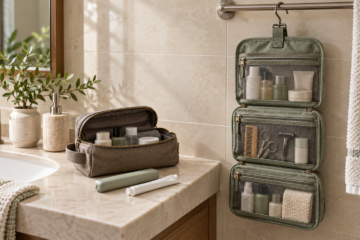
To pack makeup brushes, pack them clean and completely dry, with each head held in its shape, and keep them away from your products and anything damp. A brush roll with separate slots, a capped tube or brush guards all do the job. What ruins brushes on a trip is packing them damp or loose, not the choice of case. Those two mistakes cause the bent bristles and the smell. The rest of this page covers how to avoid them, and how to clean brushes on the road without leaving them wet.
This page covers packing and cleaning makeup tools. It is not medical advice. If a product or tool irritates your skin, the American Academy of Dermatology advises seeing a board-certified dermatologist.
Why Brushes Come Home Bent and Dirty
Three separate things go wrong, and each has its own fix.
Bending. A brush head is a bundle of fibers glued into a metal collar called the ferrule. Pressed sideways for hours in a crowded bag, the fibers set in their new shape. A fluffy powder brush packed flat under a heavy compact comes home flat on one side.
Residue transfer. Brushes loose in a makeup bag rub against open palettes, cream pots and each other. Every trip adds a layer of mixed product to the bristles.
Moisture. A brush washed in a hotel sink and packed before it is dry spends the journey damp inside a closed case. The American Academy of Dermatology (AAD), on its page on cleaning makeup brushes read 11 September 2026, describes brushes as collecting product residue, dirt, oil and bacteria, and links dirty brushes to acne breakouts, rashes and infections. A damp brush in a closed case is exactly the condition that guidance is about.
Before You Leave: Clean and Dry
The simplest time to clean brushes is a couple of days before the trip, so they have time to dry fully.
The AAD's page sets out a method. It advises rinsing only the tip of the brush under lukewarm running water, because submerging the whole brush head will eventually dissolve the glue that holds the head to the handle. It suggests a gentle or clarifying shampoo, repeated until the water runs clear, then squeezing out excess water with a clean towel and re-forming the head to its original shape. For drying, the AAD advises laying brushes flat on a towel with the tips hanging off the edge of the counter, and specifically not drying them upright in a container, because water runs down into the ferrule and loosens the glue.
That drying instruction matters more for travel than anything else on the page. A brush packed before it is dry carries water into the ferrule and keeps it there, in a closed case, for the whole journey.
On frequency, the AAD's page suggests washing brushes every 7 to 10 days. A trip longer than that means cleaning on the road, covered below.
Packing Options Compared
We have not tested any brush case and do not recommend a product. These are types, each with a real trade-off.
| Option | Keeps shape | Keeps brushes apart | Weakness |
|---|---|---|---|
| Brush roll with slots | Good, if the slots are snug | Yes | Fabric can hold moisture; loose slots let brushes slip and bend |
| Rigid tube or cup with a lid | Good against crushing | No, brushes rub together | Hard to air out; traps moisture if brushes go in damp |
| Brush guards (mesh sleeves) | Very good, per brush | Yes | Easy to lose; must slide on without forcing bristles |
| Flat pouch with elastic loops | Fair | Yes | Heads can still be pressed flat by what sits on top |
| Loose in the makeup bag | Poor | No | The cause of most bent and dirty brushes |
| Improvised: glasses case, pencil case | Good against crushing | Partly | Size has to match brush length |
Brush guards, the thin mesh sleeves some brushes are sold in, are the tip most ranking pages end with and deserve a place higher up. They hold the head in its intended shape and keep bristles off everything else, in any case type.
How to Pack Them, Step by Step
- Check that every brush is dry to the base of the bristles, not just the tips. Press the head gently against a tissue near the ferrule. Any damp mark means it waits.
- Re-form each head into its shape with your fingers, and slide on a brush guard if you have one.
- Load brushes head up in a roll or tube, so nothing presses on the bristles.
- Keep the brush holder separate from open products. A palette that cracks, or a cream pot that opens, should not be able to reach the bristles.
- Place the brush holder where it cannot be crushed, on top of soft items, not under a heavy toiletry bag.
Cleaning on the Road Without Packing Them Wet
On a longer trip, cleaning brushes is easy. Drying them in time is the hard part. Plan the wash for a night with at least one clear day before you next pack.
A small amount of gentle shampoo or brush cleanser decanted into a travel bottle is enough for a kit. At a US airport, a liquid cleanser counts toward the carry-on liquids rule. At the time of writing, TSA's liquids rule page, read 11 September 2026, allows containers of 3.4 ounces (100 milliliters) or less per item, and TSA's 3-1-1 FAQ states one quart-size bag per passenger. Which products count as liquids is set out in what TSA considers a liquid, and choosing a container size that does not waste bag space is covered in travel bottle sizes explained. Check tsa.gov and your airline before you fly, as rules differ by country and change.
Follow the same method as at home: tips only, lather, rinse until clear, squeeze out with a towel, re-form, dry flat with the tips over the edge of a counter or shelf. Hotel towels and a bathroom counter work.
If the brushes are not dry by departure, they should travel open, not sealed: loose in an open mesh pouch or a roll left unrolled at the top of the bag, then laid out to finish drying as soon as you arrive. A damp brush in a closed case is the one thing to avoid.
What Happens When Brushes Stay Damp
Moisture, organic residue and no airflow are the same conditions that cause trouble in any closed container. The mechanism is explained in our piece on mold in a travel bottle, and the logic carries over to a brush roll: the problem is not the fabric but what is trapped in it.
A brush roll or case needs the same care as the brushes. Wipe it out, turn it inside out if you can, and let it dry open after each trip before it goes away. The habit is the same one we describe in how to store travel bottles between trips: dry first, then close.
Sponges and Beauty Blenders
Sponges hold far more water than brushes and take longer to dry. The same rules apply with more force. Pack them dry, in a ventilated case or pouch, not a sealed box, and away from brushes.
Sharing Brushes
The AAD's page advises against sharing brushes, and the FDA's guidance on cosmetic safety, read 11 September 2026, advises against sharing cosmetic products because germs can pass between people. On a trip with friends, that applies to brushes as much as to the products.
What We Did Not Test
This page is desk research. We have not tested any brush roll, case or guard, and we have not measured drying times, which depend on the brush, the fibers and the room. The cleaning and drying guidance is the American Academy of Dermatology's, quoted as read on 11 September 2026. We name no products and recommend none.
FAQ
What is the best way to pack makeup brushes for travel?
Clean and fully dry, each head re-formed and ideally in a brush guard, loaded head up in a roll with separate slots or in a capped tube, and kept apart from open products and anything damp.
Can I pack makeup brushes while they are still damp?
It is best not to seal them in a case damp. The American Academy of Dermatology advises drying brushes flat with the tips over the edge of a counter, not upright, so water does not run into the ferrule. If brushes are not dry by departure, carry them in an open, ventilated pouch and finish drying them on arrival.
How often should makeup brushes be cleaned on a trip?
The American Academy of Dermatology's page suggests every 7 to 10 days. On a shorter trip, cleaning before you leave is usually enough.
Is a brush roll or a brush case better?
A roll with snug slots keeps brushes apart and in shape. A rigid case protects better against crushing but lets brushes rub together and is harder to air out. Brush guards improve either one.