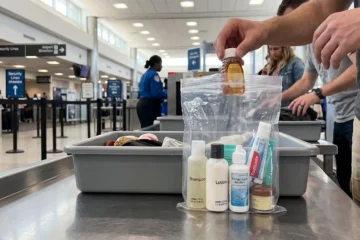
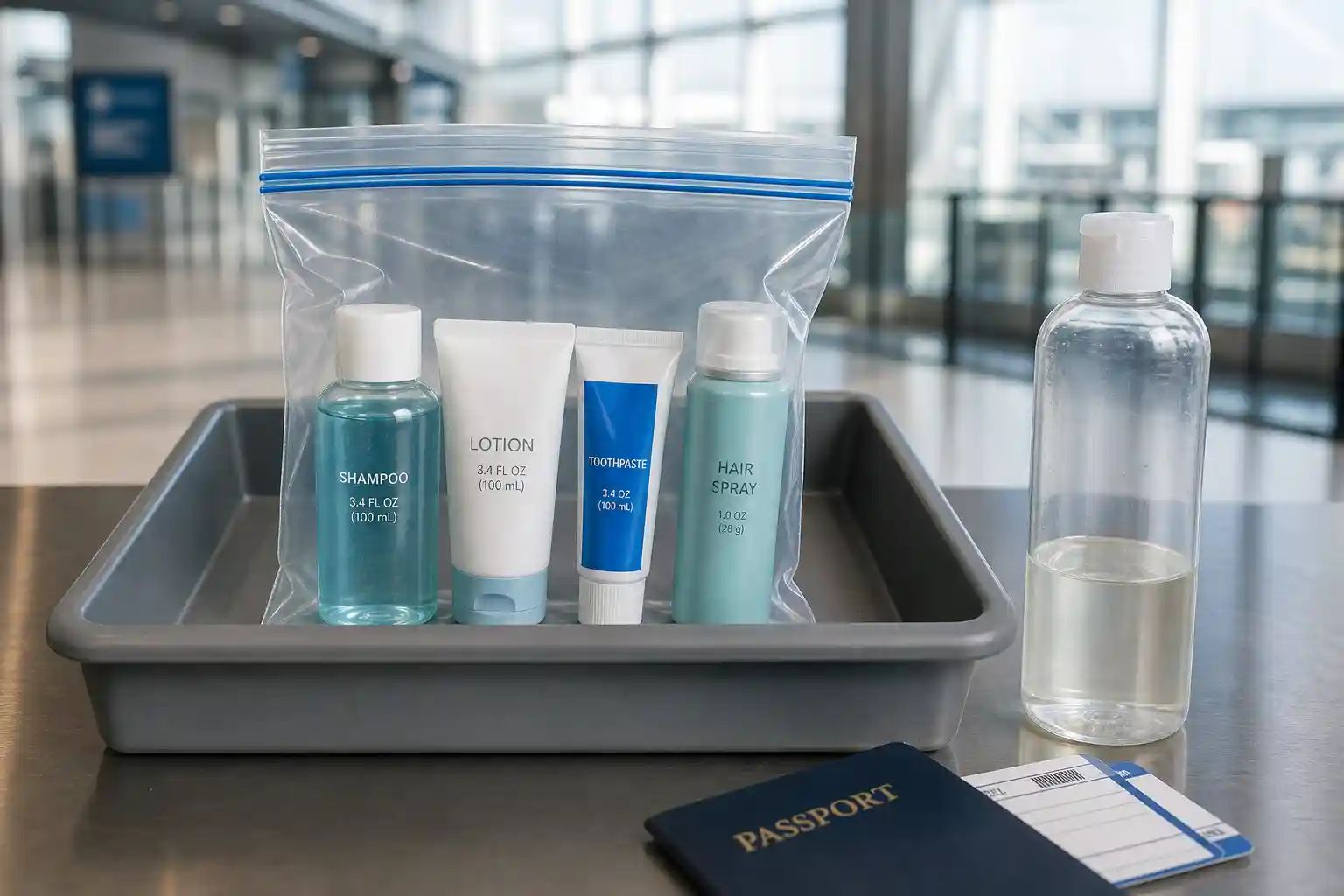
The TSA 3-1-1 rule lets each passenger bring liquids, gels, aerosols, creams and pastes through a US checkpoint in containers of 3.4 ounces (100 ml) or less, with every container fitting inside one quart-size resealable bag, and one such bag per passenger. This is a Transportation Security Administration rule and it governs airports in the United States. If you are departing from an airport in another country, that country’s authority sets the limit and the bag rules, and they are not always the same. Check the authority for the airport you are actually leaving from.
Last checked: August 2026. Rules change without notice and screening can differ by airport. Every figure below is attributed to the page that publishes it, and the section near the end sets out what we could and could not verify.
The Three Numbers in the TSA 3-1-1 Rule, and What Each One Limits
The slogan is easy to remember and easy to misread, because each digit constrains a different thing.
| The number | What TSA’s rule limits |
|---|---|
| 3 | 3.4 ounces (100 ml), the maximum size of each container |
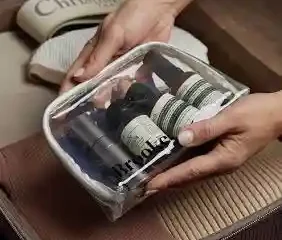
| 1 | one quart-size resealable bag, which every one of those containers has to fit inside |
| 1 | one such bag per passenger |
TSA publishes the rule on its liquids rule page and restates it in a plain-language answer titled What is the 3-1-1 liquids rule? on tsa.gov. It has been the standing US carry-on rule since 2006.
Two things the three numbers do not do. They do not cover checked baggage, which is a separate regime run by the FAA under its hazardous materials rules, and which sets its own limits on toiletries and aerosols. And they do not decide any individual item at the checkpoint.
The Limit Is on the Container, Not on What Is Left in It
This is the misquote that strands the most people. The rule is written per container. A 6 ounce bottle with a splash of conditioner in the bottom is still a 6 ounce bottle, and the marked capacity is what the rule addresses, not the amount of liquid you can see through the plastic.
That cuts both ways. A full 3 ounce bottle is inside the limit. A nearly empty 8 ounce one is not, however little is sloshing around in it.
So decanting into containers marked 3.4 ounces or 100 ml is the whole game, and a travel bottle with no capacity marking at all puts an officer in the position of guessing. Buying nothing is often fine here. What matters is that the container is small and that its size can be established at a glance.
One Bag Per Passenger Is Not One Bag Per Family
TSA states the allowance per passenger. A family of four traveling in four seats therefore has four quart bags of ordinary toiletries between them, not one, and there is nothing clever about that. It is the rule as written.
That reading has a limit we will be honest about. We have not found a TSA page addressing the allowance for a lap infant, a child under two traveling without a purchased seat, and we are not going to invent one. TSA runs a public help channel, AskTSA, and that question belongs there.
A second gap is worth naming. TSA’s wording says quart-size. In the pages we could establish, we did not find TSA publishing that bag’s dimensions in inches, which is why the internet is full of confidently different measurements. We are not adding a number to that pile. A resealable bag sold as one quart is the safe reading.
What Counts as a Liquid Is Wider Than the Word Suggests
TSA’s rule covers liquids, aerosols, gels, creams and pastes, which is why the category catches things that do not pour. Toothpaste, shampoo, conditioner, mouthwash and lotion all count against the quart bag under TSA’s published rule, and toothpaste surprises people most often because nobody thinks of a tube as a liquid.
The word to hold on to is paste. If it spreads, sprays, squeezes or gels, treat it as inside the rule and size it accordingly.
For any specific item, TSA maintains a searchable What Can I Bring? tool giving a per-item answer for carry-on and checked baggage. That is the right place to settle an argument about one product, and a better use of five minutes than any packing forum, including this page.
The Exemptions Have a Procedure, Not a Loophole
Some liquids sit outside the container limit and outside the quart bag. TSA publishes those exemptions and it publishes what you are expected to do with them, and the second half is what summaries leave out.
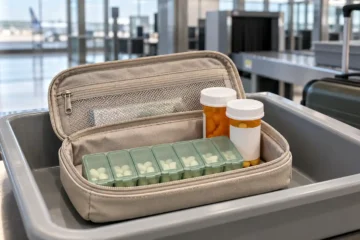
Medically necessary liquids. TSA allows larger amounts of medically necessary liquids, gels and aerosols in reasonable quantities for the trip, and states that they must be declared to an officer at the checkpoint for inspection. It does not publish an ounce figure for reasonable. See TSA’s guidance for travelers with disabilities and medical conditions and its item page for liquid medications.
Formula, breast milk and juice. TSA treats these as exempt from both the container limit and the quart bag, on its page about breast milk, formula and juice. The published procedure is to tell the officer at the start of screening and remove the items so they can be screened separately.
How much medicine to carry, and whether you need it, is a question for your prescriber or pharmacist. TSA’s pages describe screening, not care.
The Officer Decides, and We Will Not Coach You Around That
TSA’s item pages carry a standing note that the final decision rests with the TSA officer on whether an item is allowed through the checkpoint. Read that as the operative sentence. The published rule tells you what to expect. The person in front of you at 6 a.m. applies it.
So this page will not tell you how to get something through a checkpoint, which bottle looks small enough, or which lane moves faster. That genre of advice is written by people with nothing at stake, and it costs the reader either an item or a flight. If something is over the limit, the honest expectation is that it does not travel with you in the cabin.
Pack so the answer is boring: everything liquid in containers marked 3.4 ounces or 100 ml, all of it in one quart bag, exempt items separate and declared. Our disclaimer sets out the limits of what any page here can tell you about a rule someone else enforces.
What Has Been Reported, and What TSA Has Actually Published
This is the live risk on this topic, so here is the situation rather than a headline.
In July 2025, Homeland Security Secretary Kristi Noem said the liquids policy was under question. CBS News reported the quote on 17 July 2025: “The liquids, I’m questioning. So that may be the next big announcement is what size your liquids need to be.” A steady stream of posts has announced a 2026 change ever since.
What we can establish is that no replacement rule has been published. TSA’s pages still state the 3.4 ounce container limit, the quart bag and the one bag per passenger. Reporting also describes newer computed tomography scanners at many checkpoints and disagrees with itself about what those checkpoints allow. If the rule changes, tsa.gov will say so, and that is the only place this site takes it from.
Two things follow. Screening equipment differs by airport, so an instruction you were given last month is not a rule for the next checkpoint. And an officer’s instruction on the day governs there, whatever any article says.
Departing From an Airport Outside the United States
The 3-1-1 rule is TSA’s, and TSA screens US airports. Your return leg from another country is screened by that country’s authority, under its own rule, in its own units.
The limit is commonly stated in milliliters elsewhere and the container rule is often familiar, but bag size, the exemption procedure and the treatment of items like frozen milk genuinely differ between jurisdictions. Clearing a US checkpoint on the way out predicts nothing about the way back.
Check the security or hand baggage page published by the airport authority or the national aviation authority for each departure airport on your itinerary, separately, including connections. Then pack to the strictest rule on the whole trip, because that is the one that decides what survives.
How We Checked This, and What We Could Not Check
We have not flown with any of this, tested anything, or run anything through a checkpoint. This page is desk research from named primary sources, the standard described on our about page.
The honest gap: tsa.gov refuses the automated tools we use to read pages, and it did so again on 24 August 2026. The statements above match what TSA’s own pages set out when this site last captured them, in August 2026, and they are long-standing positions consistent across those pages. We have not re-read them directly with our own tooling, and we are telling you that rather than implying a check we did not perform. Open tsa.gov yourself before you fly.
We also left out numbers we could not read on the source: the quart bag in inches, any ounce figure for reasonable quantities of medication, and the FAA’s checked baggage limits. Those deserve their own pages, written when the source can be read properly.
FAQ
Is the TSA 3-1-1 rule still in effect in 2026?
As far as we can establish, yes. TSA’s published rule is still 3.4 ounces (100 ml) per container, one quart-size bag, one bag per passenger. A 2025 comment by the Homeland Security Secretary that liquid sizes might change has produced a great deal of coverage announcing a new rule, but no replacement rule has been published.
Does a half-empty bottle bigger than 3.4 ounces pass?
No. The rule is written per container, so the size of the bottle is what it addresses, not how much is left inside. A nearly empty 6 ounce bottle is a 6 ounce bottle. Decant into a container marked 3.4 ounces or 100 ml instead.
Do my children each get their own quart bag?
TSA states the allowance as one bag per passenger, so a child traveling in their own seat is a passenger with their own bag. We have not found a TSA page addressing a lap infant under two with no purchased seat, and we will not guess. AskTSA is the place for that one.
Does liquid medication have to go in the quart bag?
TSA allows medically necessary liquids in reasonable quantities beyond the 3.4 ounce limit, and states they must be declared to an officer at the checkpoint for inspection. It publishes no ounce figure for reasonable. How much medication you need is a question for your prescriber or pharmacist.
Does 3-1-1 apply when I fly home from another country?
No. 3-1-1 is a TSA rule for US airports. Another country’s screening authority sets its own limits, bag rules and exemptions. Check the published rule for each departure airport on your itinerary, including the return leg, and pack to the strictest one.