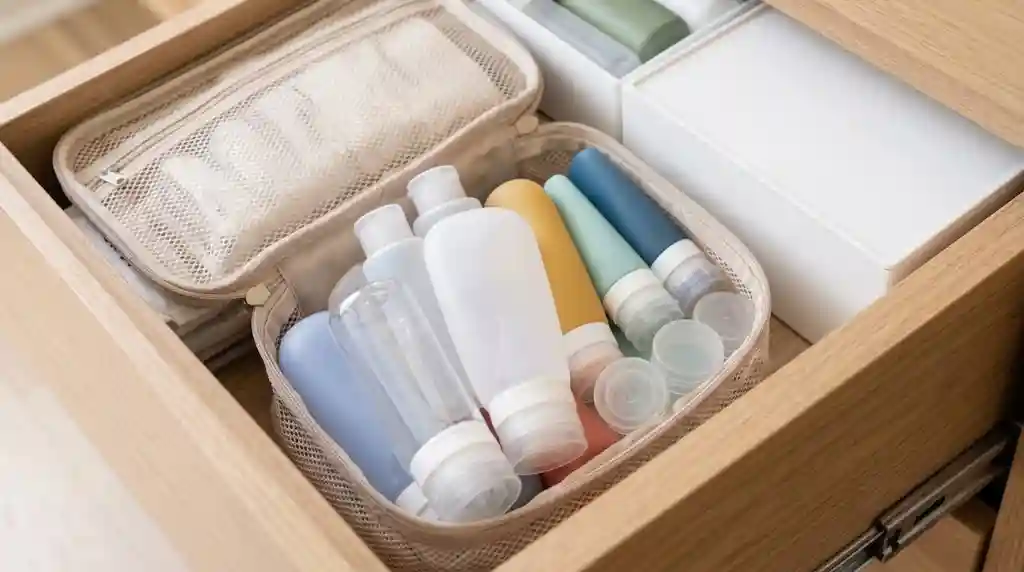
How to Store Travel Bottles Between Trips
Travel bottles should be stored empty, dry and uncapped. Why that matters, how to keep caps with their bottles, and what to check before the next trip.

Travel bottles should be stored empty, dry and uncapped. Why that matters, how to keep caps with their bottles, and what to check before the next trip.
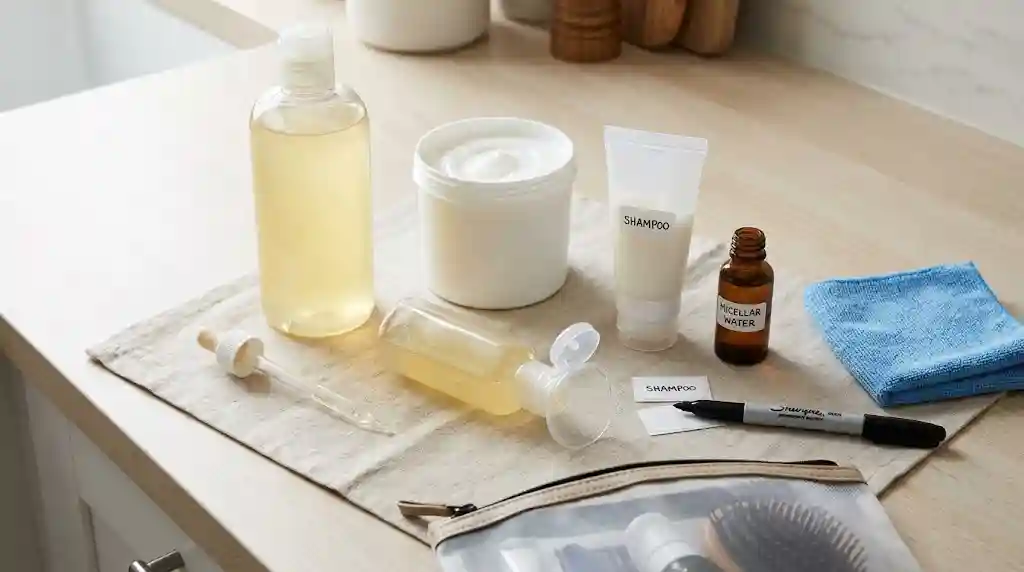
Refilling travel bottles takes about four minutes per product with the right order. The routine, the tools, and the step most people skip.
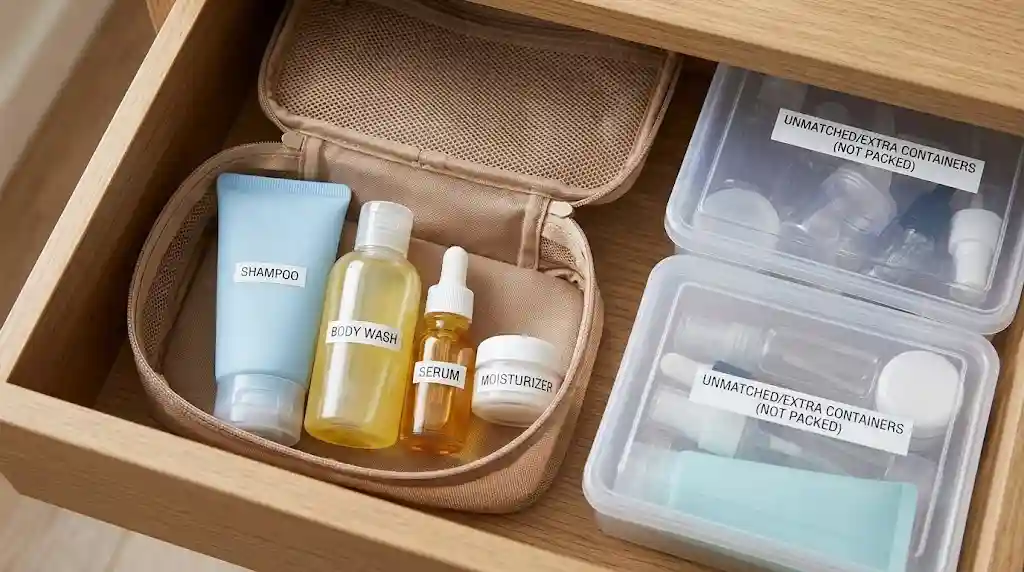
Most 21-piece travel bottle sets go mostly unused. Here is what actually earns a place in a refillable kit, by product type, not by piece count.
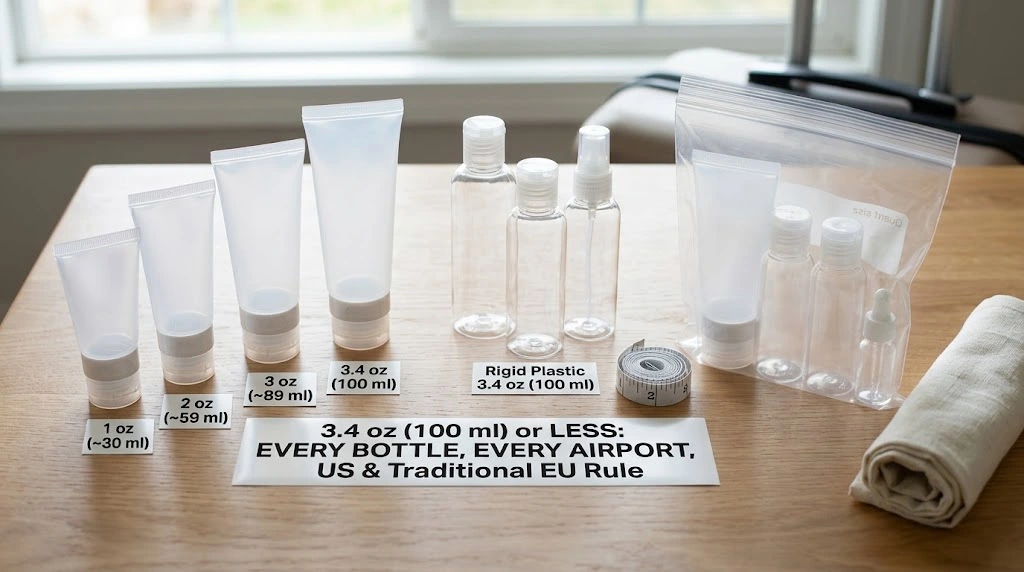
Travel bottle sizes run 1oz to 3.4oz. The checkpoint limit is about the container size, not how full it is, and the number isn’t the same everywhere.
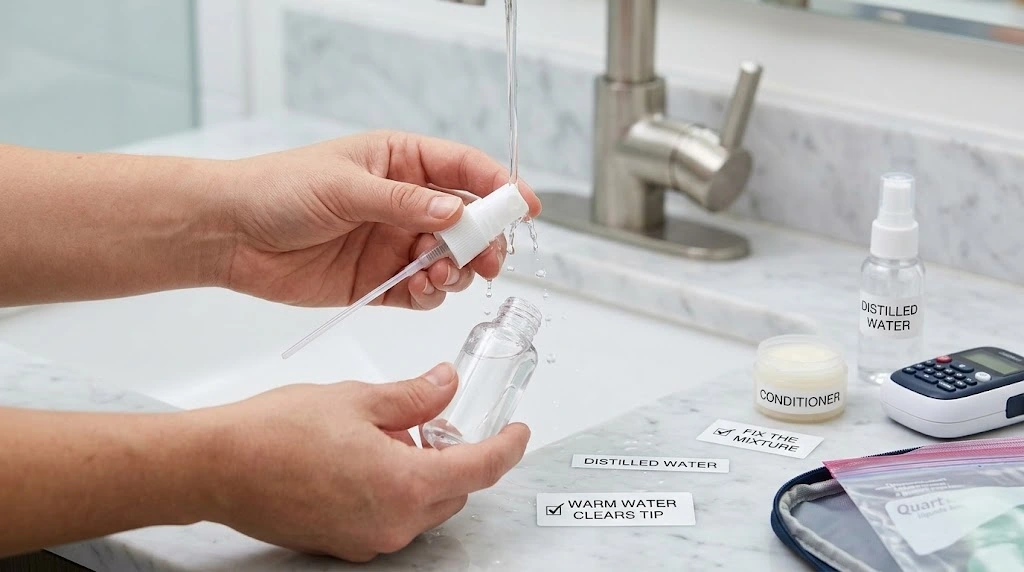
A hair mister clogs because of what you put in it, not because it is small. What to mix, how to refill on the road, and how to clear a blocked nozzle.
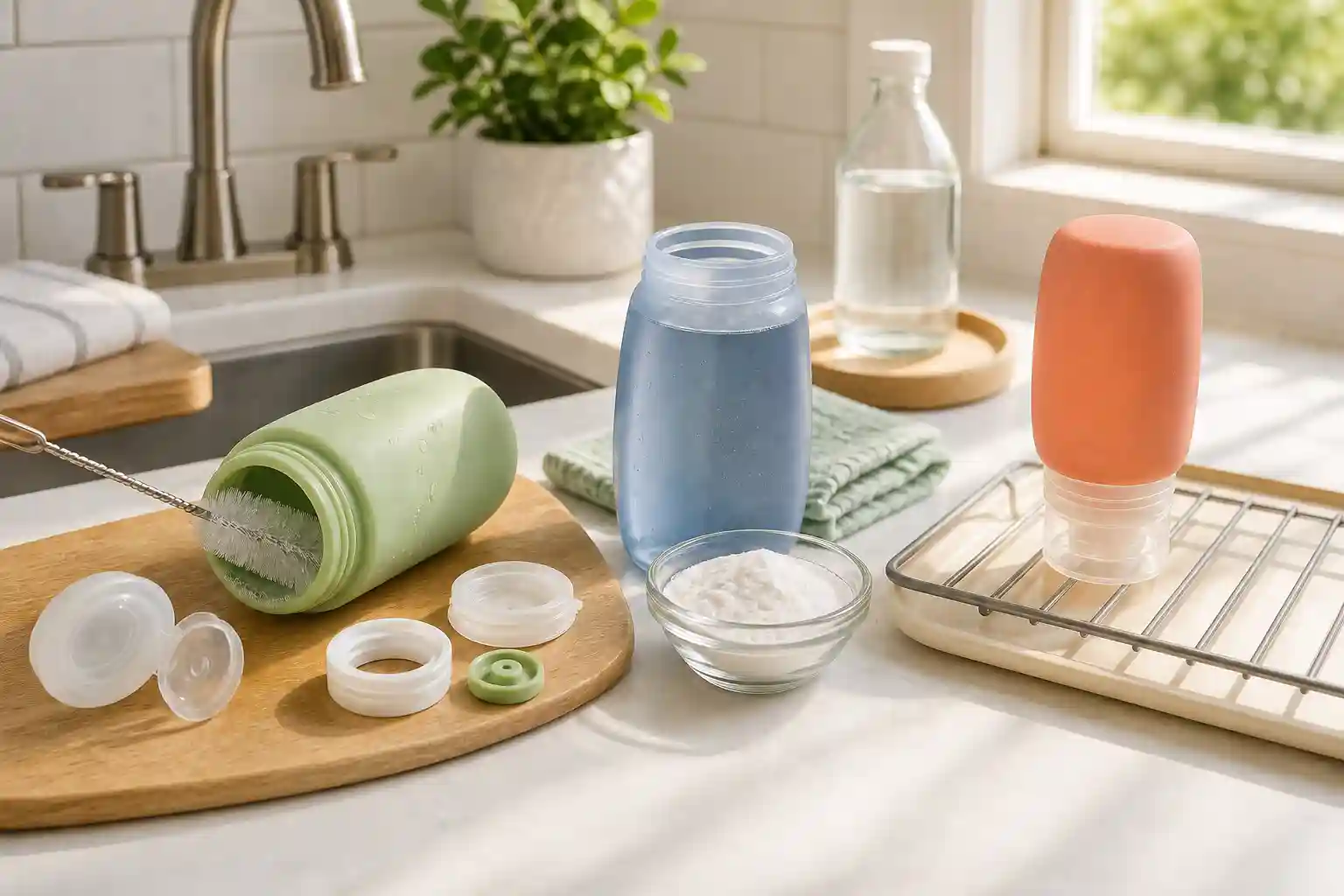
Rinsing removes residue. It does not remove absorbed smell. Why silicone travel bottles hold odor, what actually shifts it, and what bleach does to the seal.
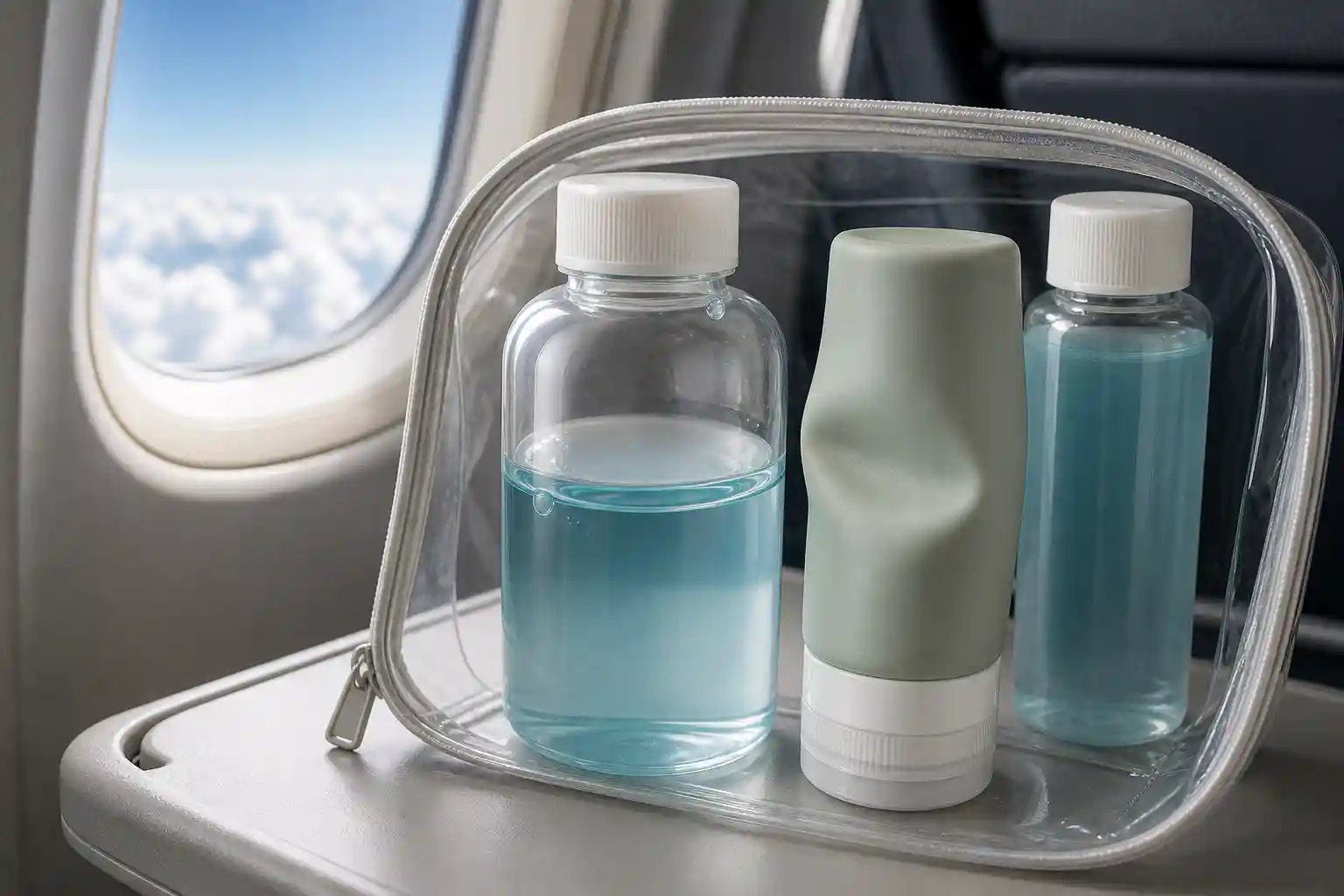
Travel bottles leak because cabin pressure drops and trapped air expands. Here is the real mechanism and the fill and seal habits that actually stop it.
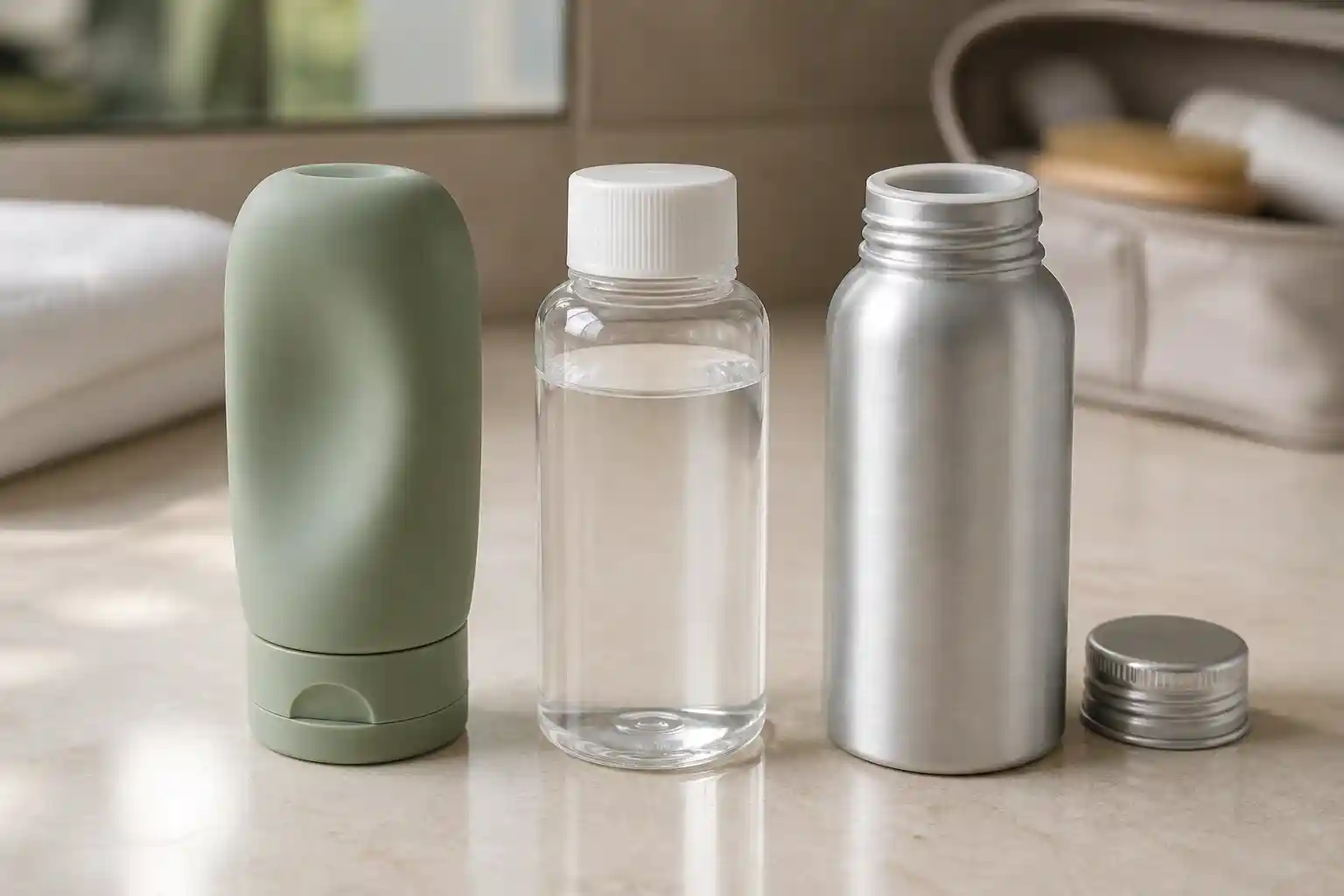
Does the material actually matter for travel bottles? Compare silicone, plastic and aluminum by leak resistance, chemistry and what fails first.
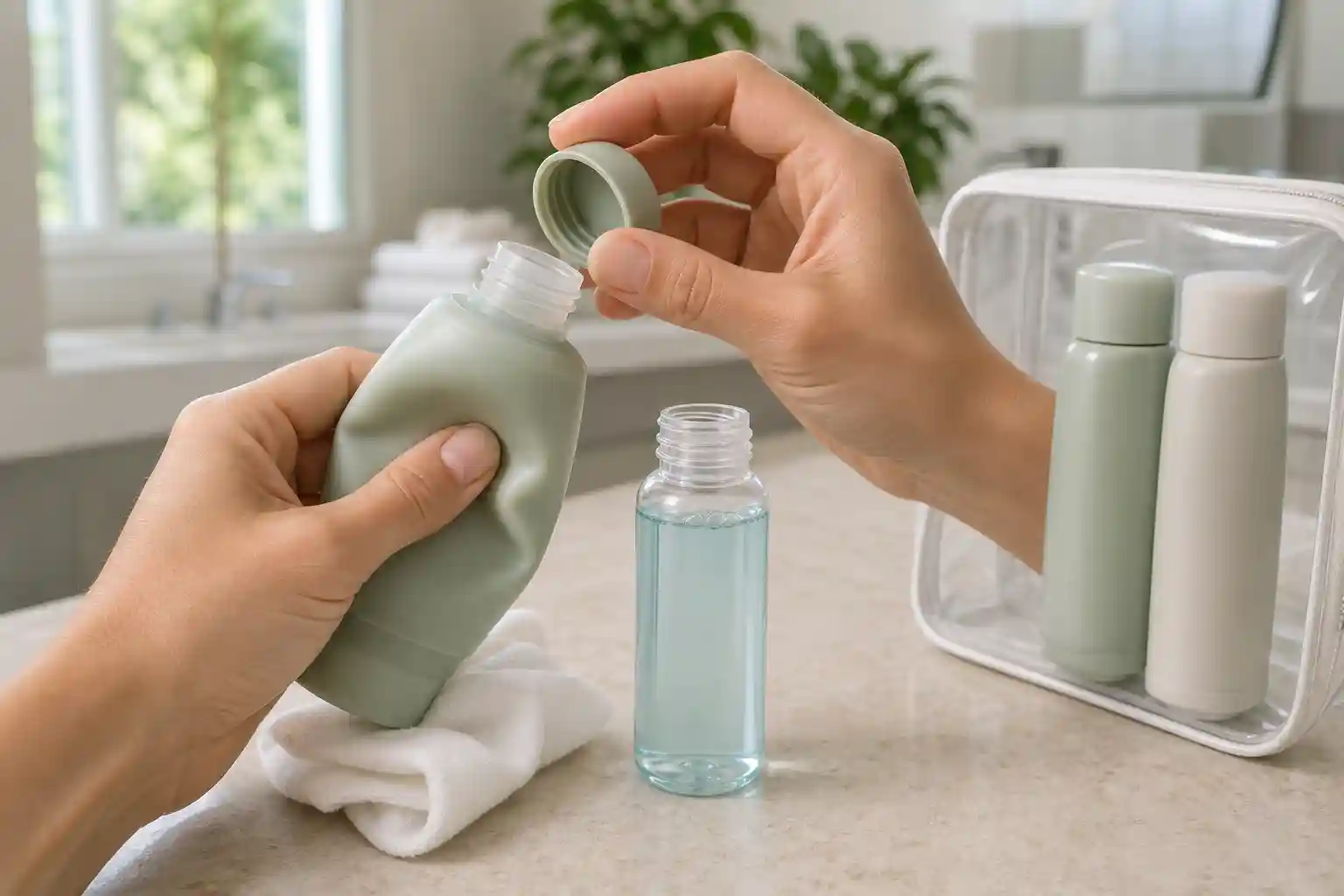
How full, which way up, and does the valve matter. A step-by-step method for filling and closing rigid and flexible travel bottles before a flight.
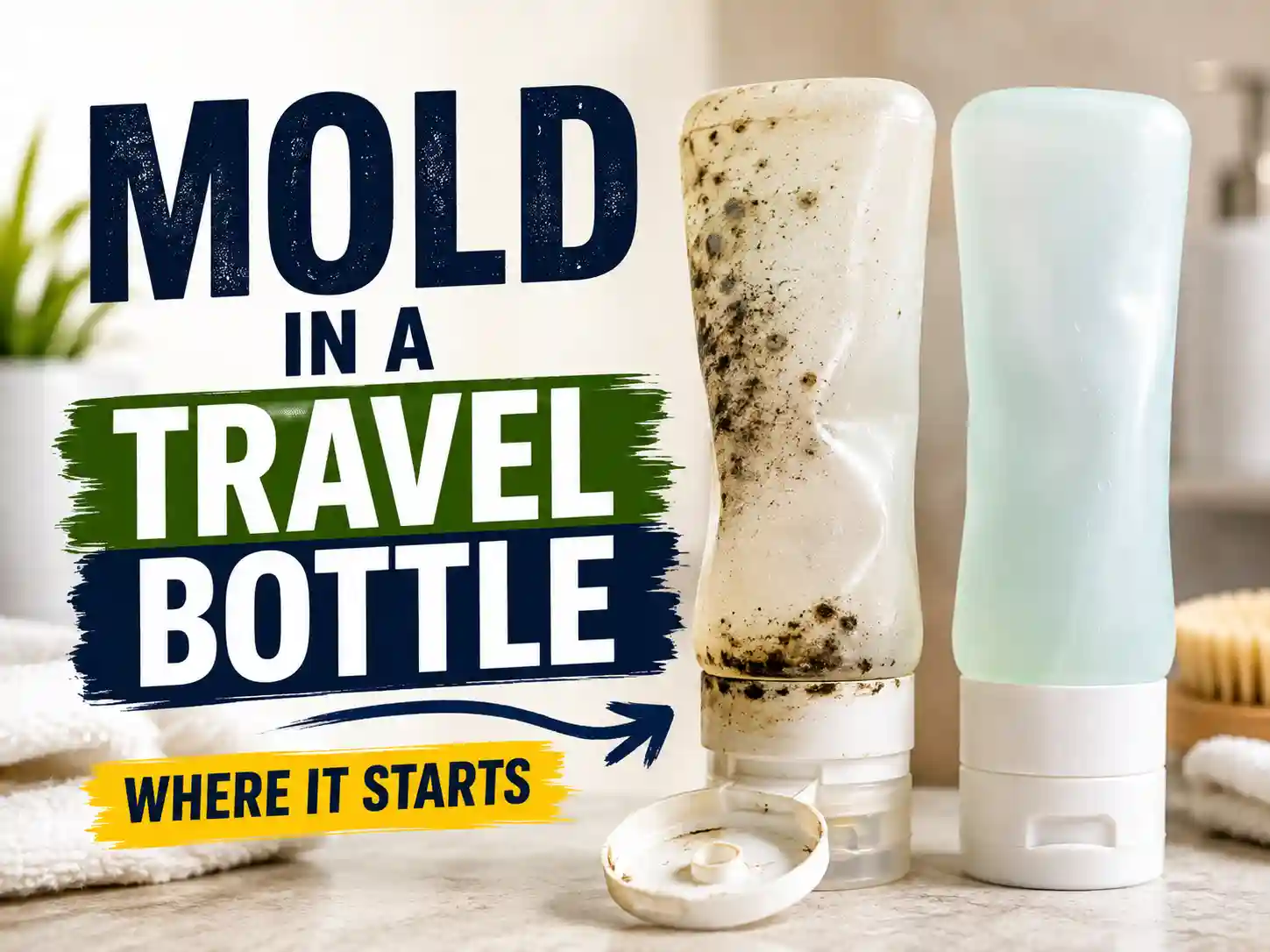
Black specks under the cap of a travel bottle usually mean mold. Here is why it grows there, how to clean it, and how to keep it from coming back.