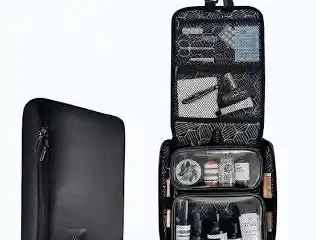
Taking vitamins on a plane is allowed in both carry-on and checked bags, according to TSA's What Can I Bring page for vitamins, read on September 25, 2026. What changes the answer is the form, not the vitamin: tablets and capsules go through as solids, liquid supplements fall under the 3-1-1 liquids rule, and powders over 12 ounces (350 mL) in a carry-on have to come out into their own bin. Loose capsules in a zip-top bag are not against a TSA rule, but they can be hard to identify later, and the rest of this page covers how to pack them so they stay recognizable for the whole trip.
This page is about packing and screening, not about supplements themselves. We do not say what to take or how much. If you take supplements alongside prescription medicine, a pharmacist is the right person to ask how the two fit together, before the trip rather than during it.
What TSA's Own Pages Say, Read on September 25, 2026
The pages that rank for this question are mostly supplement brands and travel blogs. Several describe TSA rules that TSA's own pages do not state, such as special treatment for softgels or gummies. We have kept to what TSA publishes, quoted and dated.
- Vitamins. TSA's What Can I Bring page for vitamins lists "Yes" for carry-on bags and "Yes" for checked bags. It does not set a quantity limit or require a particular container. Like every item page, it adds: "The final decision rests with the TSA officer on whether an item is allowed through the checkpoint."
- Powders. TSA's page for protein or energy powders lists "Yes" for both bag types and states: "Powder-like substances greater than 12 oz. / 350 mL must be placed in a separate bin for X-ray screening. They may require additional screening and containers may need to be opened."
- Liquids. TSA's liquids, aerosols and gels rule page describes "travel-sized containers that are 3.4 ounces (100 milliliters) or less per item" in "a quart-sized bag of liquids, aerosols, gels, creams and pastes in your carry-on bag," and lists medications as an exemption.
At the time of writing, that is the whole of what TSA says that bears on supplements. Rules change without notice; check tsa.gov before you fly.
Supplements by Form: How Each One Is Treated
| Form | Which TSA page applies | What it means for packing |
|---|---|---|
| Tablets and hard capsules | Vitamins: "Yes" carry-on and checked | Pack as solids; no quart bag needed |
| Softgels and gummies | Vitamins: "Yes" carry-on and checked | TSA's vitamins page does not single them out; the officer has the final say |
| Powders (protein, greens, electrolyte mixes) | Protein or energy powders | Over 12 oz (350 mL) in a carry-on goes in a separate bin and may be opened |
| Liquid drops and syrups | Liquids rule (3-1-1) | 3.4 oz (100 mL) or less per container, inside the quart bag |
| Effervescent tablets | Vitamins, as a solid | Pack as solids; keep the tube closed so a spill cannot reach them |
Two rows need a closer look.
Liquid supplements. TSA's liquid medication page allows "medically necessary liquids, gels, and aerosols in reasonable quantities," declared at the checkpoint. Whether a particular liquid supplement counts as medically necessary is not something TSA's pages decide in advance, and the officer has the final word. The packing assumption that avoids an argument is the ordinary 3-1-1 limit: small bottles, inside the quart bag. If a clinician has prescribed a liquid product, the medication rules in TSA medication liquid rules are the ones to read. For what TSA counts as a liquid, gel or paste in the first place, see what TSA considers a liquid.
Powders. The 12 ounce figure is a screening threshold, not a ban. A tub under it can stay in the bag. A tub over it has to come out and may be opened. TSA's powders FAQ, written about flights arriving in the US from overseas, adds that a powder over that size "that cannot be resolved at the central checkpoint will not be allowed onto the cabin of the aircraft and will be disposed of." For a large tub, the checked bag is the easier route, which TSA itself suggests for non-essential powders.
The Loose Capsules in a Baggie Question
This is the most common way people pack supplements, and it clears a checkpoint. TSA's vitamins page does not require an original bottle. The problems it creates happen later.
- Identification. A bag of mixed capsules and tablets is fine until someone needs to know what they are: you, a week into the trip, sorting two similar white tablets; a customs officer abroad; or anyone helping you if you are unwell. An unlabeled baggie answers none of them.
- Mixing with medicine. If supplements and prescription pills share a bag or an organizer, they become harder to tell apart. The CDC's Travelers' Health guidance advises keeping medicines in their original, labeled containers when traveling abroad, and a baggie of mixed pills works against that.
- Crushing and spills. A thin bag offers no protection against being squeezed in a full carry-on, and a leaking toiletry bottle nearby reaches it easily. A rigid bottle with a closed cap resists both.
How to Pack Supplements So They Stay Identifiable
- Keep the original bottle for anything you carry in quantity, or for the whole trip if space allows. The label is the identification.
- If you decant, label the new container. A small pill bottle or pouch with the product name written on it is enough. The method we use for small containers is in how to label travel bottles.
- Keep supplements separate from prescription medicine, in their own labeled container or their own organizer row, so neither is mistaken for the other.
- Photograph the labels before you leave, including the ingredient panel, so you have the product name and ingredients if a container goes missing.
- Pack powders by the 12 ounce line. Under it, the carry-on works. Over it, consider the checked bag or a smaller travel quantity.
- Put liquid drops in the quart bag, in containers of 3.4 ounces (100 mL) or less.
If you already use a pill organizer for medication, the checkpoint side of that is covered in pill organizers on a plane.
Carry-On or Checked Bag?
TSA allows vitamins in both. The practical split is by what you need on the trip:
- Carry-on: the supplements you use daily, so a delayed or lost checked bag does not take them with it.
- Checked bag: large powder tubs and bulk refills you will not need until you arrive.
Heat is the other consideration. If the label on your product carries storage instructions, those are more reliable than any general rule, and a pharmacist can advise if you are unsure how a product should be kept while traveling.
Flying Abroad With Supplements
TSA's pages cover what leaves a US airport. What you can bring into another country is set by that country's customs and health authorities, and an ingredient sold freely in the US is not necessarily permitted everywhere. Check the destination's official customs or embassy site before you pack a large supply, particularly anything in powder form or with an unfamiliar botanical ingredient. For medicines, the CDC advises checking with the destination's embassy and those of any layover countries; the same habit is a sensible one for supplements.
Keeping supplements in labeled original containers also helps here. A customs officer looking at a labeled bottle has something to read. A customs officer looking at a baggie of powder does not.
A Note on Regulation
It helps to know what the label on a supplement does and does not mean. The FDA's dietary supplements page, read on September 25, 2026, explains that under the Dietary Supplement Health and Education Act, manufacturers and distributors "are responsible for evaluating the safety and labeling of their products before marketing." That is a reason to keep the label with the product while you travel, and a reason to ask a pharmacist, rather than a packing guide, about how a supplement fits with any medicine you take.
FAQ
Can I bring vitamins in my carry-on?
Yes. TSA's What Can I Bring page for vitamins, read on September 25, 2026, lists "Yes" for carry-on and checked bags. The TSA officer has the final decision at the checkpoint.
Do vitamins have to be in their original bottle to fly?
TSA's vitamins page does not require it. Original bottles still make supplements easier to identify on the trip and at customs abroad, so many travelers keep them for anything carried in quantity.
Do liquid vitamins have to go in the quart bag?
Pack them as ordinary liquids: 3.4 ounces (100 mL) or less per container, inside the quart bag. TSA's medically necessary liquids allowance is decided by the officer, so the 3-1-1 limit is the safer assumption.
How much protein powder can I bring on a plane?
TSA does not set a maximum. Powder-like substances over 12 ounces (350 mL) in a carry-on must go in a separate bin for X-ray screening and may be opened, so large tubs travel more easily in a checked bag.
Should I ask anyone before flying with supplements?
If you also take prescription medicine, a pharmacist can advise on how your supplements fit with it. For international trips, check the destination's customs rules.